Queens, NY (September 1, 2008)—The origin of the Stadium Concert, as with so many things in Rock N’ Roll, starts with the Beatles. In 1964, promoter Sid Bernstein booked the Fab Four into Carnegie Hall, and the event was a smash. Inspired by the success, he decided to think bigger—much bigger—and booked the band into the then brand-new Shea Stadium, where the Mets played over in Queens. Despite the Mop Tops’ raging popularity, even their manager, Brian Epstein, didn’t think they could fill all 55,600 seats, so he asked for a then-staggering $100,000 up front—if they were going to fail in a spectacularly public way, they were going to get paid well for their trouble.
Of course, Shea Stadium sold out in no time, and when The Beatles took the stage on August 15, 1965, two things happened. First, the modern-day stadium concert was born, with all its pros and cons. Secondly, the band’s specially designed 100-watt Vox amplifiers, run through the announcement PA, were hopelessly outmatched by hordes of screaming fans, helping underline the need for a sector of the pro audio industry that could provide more robust concert sound reinforcement.
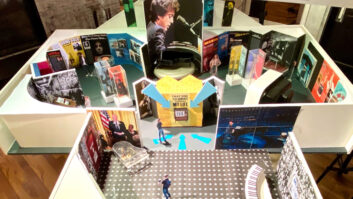
So when Billy Joel took the stage in July to perform the two final concerts held there—dubbed The Last Play at Shea—it was truly the end of an era. The venerable venue will be torn down at the end of the current Mets season, and most New Yorkers will be happy to see it go (Sports Illustrated once tagged it “a wretched concrete mess with all the charm of a concrete bunker”). However, for two nights, it was home to a pair of marathon gigs as Joel and his band said goodbye to the stadium—and unlike the Beatles’ appearance 43 years earlier, this time, people could hear the show.

Along with the Piano Man came a cavalcade of singers that sat in, ranging from Tony Bennett, to Roger Daltrey (The Who), Steven Tyler (Aerosmith) to Garth Brooks, John Mellencamp to John Mayer, and solo Eagle, Don Henley. Oh, and there was the last-second addition of Paul McCartney, on-hand to fittingly play the final song performed at Shea.
“We didn’t find out until about 45 minutes before the show started that he was going to show up with the original Hofner bass,” said Joel’s monitor engineer, Mike Pirich. “They actually sent somebody over to the Smithsonian Institute to take the piece out—pretty neat stuff. The band rehearsed some songs without him; he flew in from Japan and they cleared LaGuardia Airport to get him to Shea in time. If you’re Paul McCartney, you get that leeway.”
Mixing monitors for any act playing for thousands of fans can be hard, but when you throw in two nights of guest artists, that kicks things up a few notches: “I think it went better than expected,” said Pirich. “My system engineer, Josh Weibel, and I just took the attitude—particularly with the guest artists—that we didn’t want them to think about monitors at all. Since they didn’t have their own band, we just wanted them to go up there, fit right in and just think about the tunes without having to worry about monitors. Luckily, it was pretty straight ahead; they all just asked for full band mixes and away we went.”

Helping keep track of all 18 stereo mixes and 22 mono mixes on stage—fed to the horn and string sections, as well as the large backing band and guests—was a Studer Vista 5 SR console. In fact, there was a matching one at the FOH position as well, manned by Brian Ruggles, Joel’s go-to engineer since the early 1970s. Lightly touring with the desks throughout the spring—the Shea shows capped off the North American leg—Ruggles and Pirich set up the consoles at the start of the journey, configuring them with the massive final gigs at the end in mind.
“We had 10 shows at the Mohegan Sun resort over the course of two months, all of which were done on the Studers,” said Pirich. “That allowed us to get up and running on them with our band—and we love the desks. It’s the best-sounding digital desk that I’ve run across and it’s super intuitive. It has an analog feel to it, which is kind of where my heart lies, and it works great, so we’re going to continue to use them. We love ’em.”
Despite the multitude of guests and additional musicians, the show wasn’t miked differently than the rest of the tour. “We just brought a bunch more Shure wireless stuff,” said Pirich, “and then for Tony Bennett, we used a Sennheiser transmitter with a Neumann KMS 105 capsule.”

Even with the blazing, soggy heat—95 degrees on the playing field, which meant it was considerably hotter onstage—all the concert gear held up admirably. ClairShowco flew 160-plus S-4 cabinets, all of which were bolstered by 16 S-4 subs; meanwhile, the four sizable delay towers carried hangs of R-4s. All of it was powered by a cross-section of amplifiers from Crown, QSC, Crest and Carver.
Despite that audio firepower, however, there wasn’t much in the way of a reflection problem. “Shea Stadium was fantastic for that,” said Pirich. “There was nothing that came back at us. It had a slight delay but nothing that shot back at the stage—which really surprised the band, particularly Billy. It’s not shaped like Yankee Stadium, which has a part that hooks back over; that was good.” With the final performances at Shea, Joel in fact because the sole performer who could claim having played all of New York’s major venues—Madison Square Garden and the hat-trick of Yankee, Shea and Giants Stadiums.
Discover more great stories—get a free Mix SmartBrief subscription!
One thing all live sound engineers worry about when playing any part of New York City, however, is wireless traffic, and the Shea shows were no exception. “Wireless was tight,” Pirich confirmed. “I think at any given time, we had I think about 24 channels of wireless going. It was tight, but we didn’t have any casualties.”
There weren’t casualties of any sort, in fact, thanks to a thorough load-in that found TerraPlas protecting every blade of grass. “We were joking that they actually had sights on us whenever we got near the infield—that was the sacred ground,” Pirich chuckled. “They were pretty hardcore—I wasn’t there for it, but on the first day of load in, one of the forklifts went off of the TerraPlas and about 10 old groundkeeper guys came running out and assured the crew that we weren’t going to do a show.”

The show did come off as planned, of course—even the unplanned parts, such as what to play for the final song ever at Shea. Initially, McCartney hit the stage for an encore, running through “I Saw Her Standing There” with Joel and sending an electric shock through the crowd that the stadium probably hadn’t felt since the 1986 Mets. When the musicians left the stage, however, the question arose—how do you close out such a historic concert?
“Even to the last minute, we didn’t know what to expect,” said Pirich, “but it went without a hitch and Billy was really stoked about the whole thing. He was like, ‘What song do we do?’ and Paul replied, ‘Well, I don’t know—I have a couple to choose from.’” Moments later, McCartney took the stage to tickle the ivories while Joel sat on the piano itself, singing backup; together, they launched into “Let It Be,” and for a few minutes, they took a sad stadium and made it better.
An abridged version of article originally appeared in the September 2008 issue of Pro Sound News as “The Last Play at Shea.”
| VITAL STATS
Billy Joel: The Last Play at Shea ClairShowco (Lititz, PA) |
| FOH Engineer: Brian Ruggles
Monitor Engineer: Mike Pirich Crew Chief / Systems Engineer: Cliff Downey Techs: Josh Weibel, Anthony Rossi, Chris Robertson, Chris Fulton, Donovan Friedman FOH Console: Studer Vista 5 SR Monitor Console: Studer Vista 5 SR House Speakers: Clair S-4, S-4 subs, P-2, R-4 Monitor Speakers: Showco SRM, Clair ML18 Personal Monitors: Sennheiser G2 EK300; Sennheiser 3000; Stewart PA-100BX1 House Amplifiers: Clair; Crown; QSC; Crest; Carver Monitor Amplifiers: Clair; Crown FOH Equipment/Plug-Ins: TC Electronic 2290, M5000, 1128; Lexicon PCM70; Eventide Eclipse; Yamaha SPX1000; Summit DCL200; Clair iO; Tascam DA-40, DV-RA1000; Alesis ML-9600 Monitor Equipment/Plug-Ins: Summit DCL200; Yamaha SPX990; Drawmer DS-201; Dolby/Lake LP4D12 Microphones: Audio-Technica AT4050, ATM350; AKG 451EB, 460; beyer Opus88; Shure UR4D, U4D, Beta52, Beta98, SM57, SM91, SM98, SM58, Beta54, Beta98H, KSM32; Sennheiser MD-421, MD-409, MKH-416; Countryman Type 8 |