Don’t Pass Up Part One!
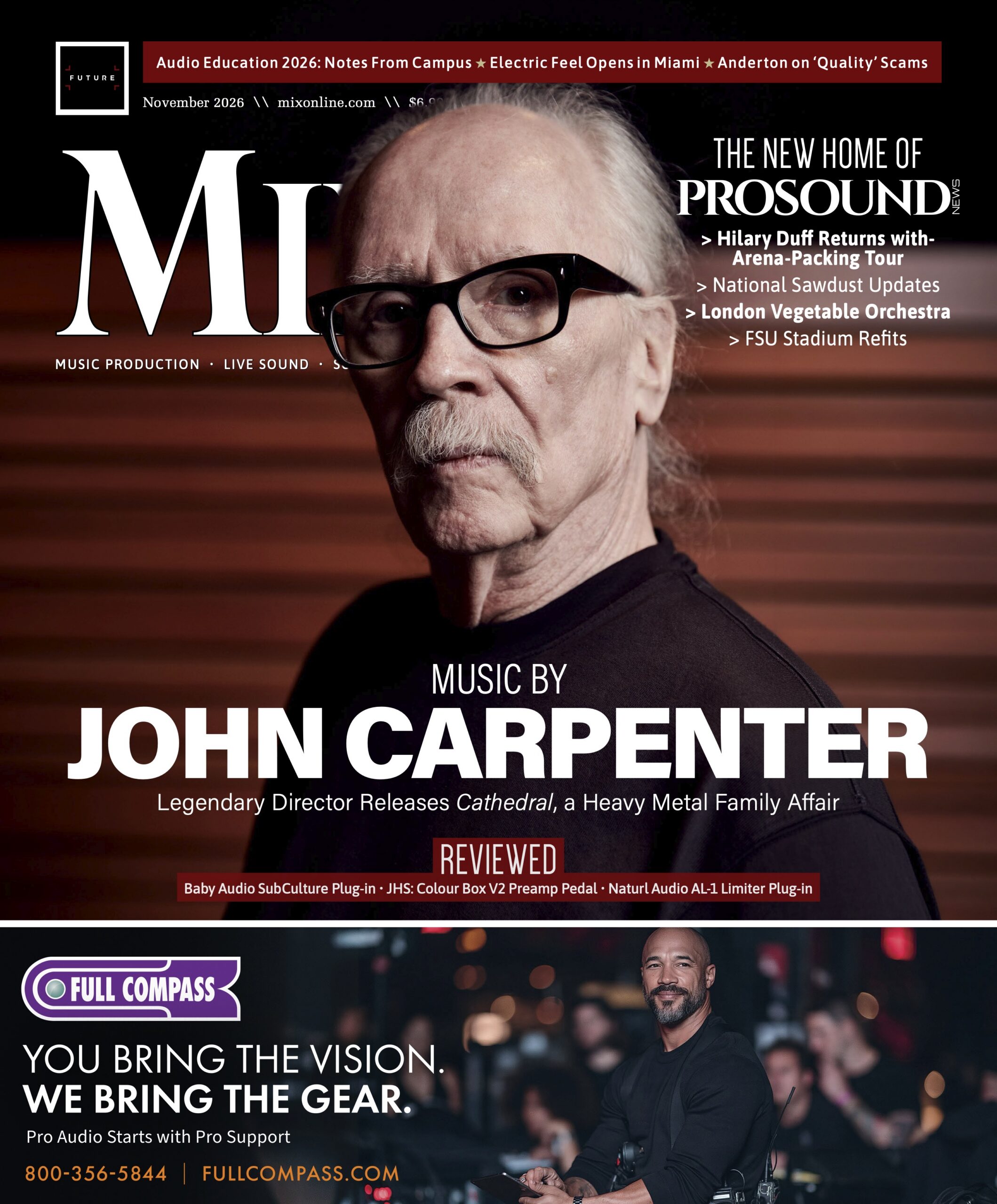
Born to a music professor father who insisted on violin lessons that he didn’t take to, John Carpenter originally scored his early films because of budget constraints. But his scores were an integral part of the picture from the start, and he went on to compose or co-compose all of them. Where composers generally say the final word is the director’s and their job is to serve the picture, Carpenter is in the unique position of directing both the film and the music. Yet, he says, the music always belongs to the composer.
“[The composer] listens to the director—we all have to listen to who’s directing—but then we go off and do it; it’s up to us,” he says.
As part of his creative process, Carpenter relies on a few go-to synthesizers, among them a Korg Triton and a Dave Smith OB6, but it’s Spectrasonics Omnisphere that he says is “like a piano on steroids. Tony Banks is the setting, and I can write anything on that. I’m not a very great musician. I have medium chops. My scores in the past are fine, but they’re all very simple, something I can play. Now I can’t even really play the ‘Halloween Theme’ anymore—not straight through. In the old days, before all this equipment, it was just a piano sitting there. I just had to play it. I was a little bit more dexterous than I am. Old age happens to all of us.”
GOING HEAVY METAL, OFF THE GRID
For Cathedral, the goal was to get away from the rigidity of working inside the computer. In addition to Carpenter’s performance, there are live drums and string players on the album, which help to move things away from the grid. “If it’s not so perfect, that’s okay,” says Davies. “Sometimes when you’re playing guitar on something that’s been perfectly sequenced, you can’t physically move that fast to get to it. That adds another dynamic and gives it that human touch.”
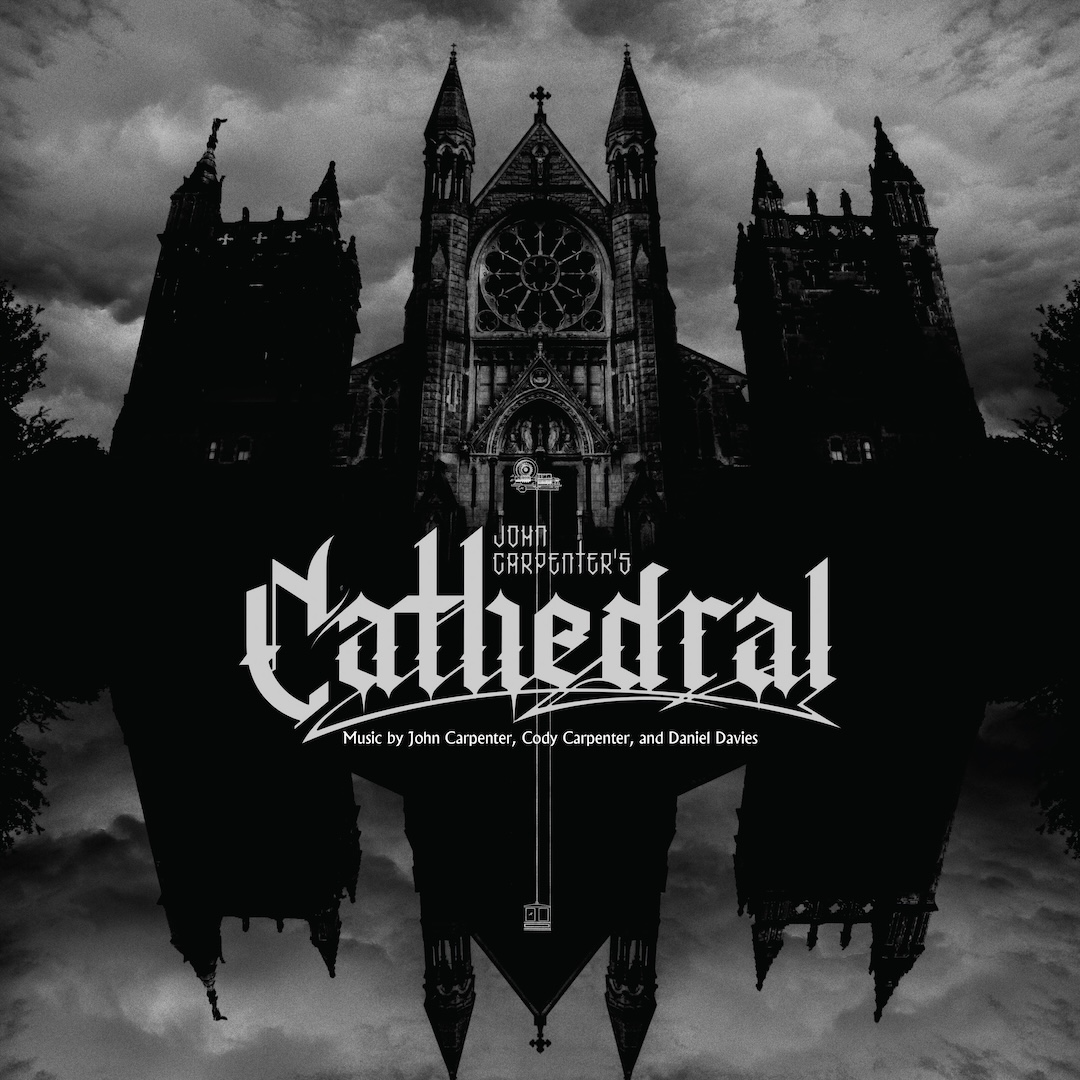 While guitars are an identifier of Cathedral, which Carpenter is calling a “heavy metal” album, synthesizers, which have been a cornerstone of his compositions from the start, are still very present. In addition to Carpenter’s favorites, central pieces for Davies are Moog, u-he Zebra and Diva. Meanwhile, he plays Gibson Les Paul and ES-335 guitars, which run through a Kemper Black Marshall Plexi, a Boss CE-1 Metal Zone and EarthQuaker Sunn O))) Life pedal. He has an affinity for ethereal sounds, naming the endless pickup on the Stratocaster through “a bunch of reverb” as one of his sonic choices.
Theme songs are a hallmark of Carpenter’s creations, and for Cathedral, it’s the album opener, “Primeval.” The track sets the tone for the story, starting eerie and ominous, then “it goes nuts,” according to Carpenter, with grinding guitars. Cathedral swings between these two sonic extremes, which complement each other while continually bringing the listener’s attention back to the music with their tonal shifts.
There are a few moments that reinterpret the classic “Halloween Theme” chills, specifically on “Identity” and “Abandoned Cathedral,” which filter the motif through church organlike sounds. These work well against the Metallica-esque crunches of tracks like “Lord of the Underground” and the industrial strains of “Revenge.”
• Seen on the Scene: AES Nashville 2026, Part 1
“There’s a theme we use throughout the album of a bell and a piano mixed together,” says Davies. “It’s played in different ways. Sometimes it’s stripped down and intimate, sometimes that same melody is over a heavier riff. We try to keep it as simple as possible, so it gives the album cohesion. We’re not too analytical about it. We just go with the feel.”
“It’s all about feel,” adds Carpenter. “I turn the machine on. There’s a keyboard there, and let’s go. We improvise all this stuff, and we talk about the feel.”
“We work on simple prompts,” says Davies.
Carpenter interjects a few examples: “I need something strong. I need an epic sound here. I need a goblin-esque type sound.”
Davies continues: “John will say, ‘We need something for this sequence in the Cathedral story. Go write a riff.’ Or, ‘We need something more intimate for this part. Cody, go do that.’ We bring these general frames of what it’s going to be, then we build it up together from there.”
• Subscribe to Mix Magazine and our Weekday Newsletter for free!
By the time Davies’ rough mix reached Spiker, the ideas were firm, so much so that the mixer says they might as well have been “delivered on 24-track tape.” He attributes the assured, clear approach to Carpenter’s years as a director, where he had to make decisions immediately.
Says Spiker: “It’s a refreshing way to be creative when you don’t have to live in the ‘every stone unturned’ environment of, ‘Here’s an idea. Okay, cool, that’s a good idea, but what other ideas do you have?’ Then you have to spend the next 20 years trying every idea. It’s like, ‘No, that’s a great idea. Let’s work it,’ and shape it as you go so it becomes part of the project. I don’t think any of us are the type of people who get too precious about trying it 200 other ways. It’s the murderer of creativity.”