Don’t Pass Up Part One and Part Two!
THE TIMELESS MIX
Mix engineer John Spiker’s approach to the mix of Cathedral, he says, was different from what he would normally do for modern pop and rock songs, which is shaping them to sound slick, big and present. For the Cathedral songs, he discovered that the sculpting method stripped away what’s “weird and off-putting about them—in the best possible way,” he says.
He prepared himself by listening to John Carpenter’s early scores and noted their oddness, and how different they were from epic, orchestral film scores. What stood out about them were the unusual frequencies and the balance of sounds that call your attention to the music. He also mixed their Halloween remake scores. But for Cathedral’s rock-leaning songs, he introduced some of his modern mixing skills.
As with the three musicians, “feel” replaced many of Spiker’s more conventional mixing tactics. He instead relied on whether a section scared him or if it was quiet and he was leaning in to hear it. “It’s a trickle-down from John,” says Daniel Davies. “It doesn’t have to be technically perfect. It just has to evoke a feeling.”
• Subscribe to Mix Magazine and our Weekday Newsletter for free!
“We’re always trying to make sure we’re keeping the texture of what the essence of the song is,” says Spiker. “When I go over to Daniel’s to hear the record for the first time, I can hear the essence, the things that are weird and need to always exist. We have to make sure that once we do all the things in the mixing, we don’t lose the chaos.”
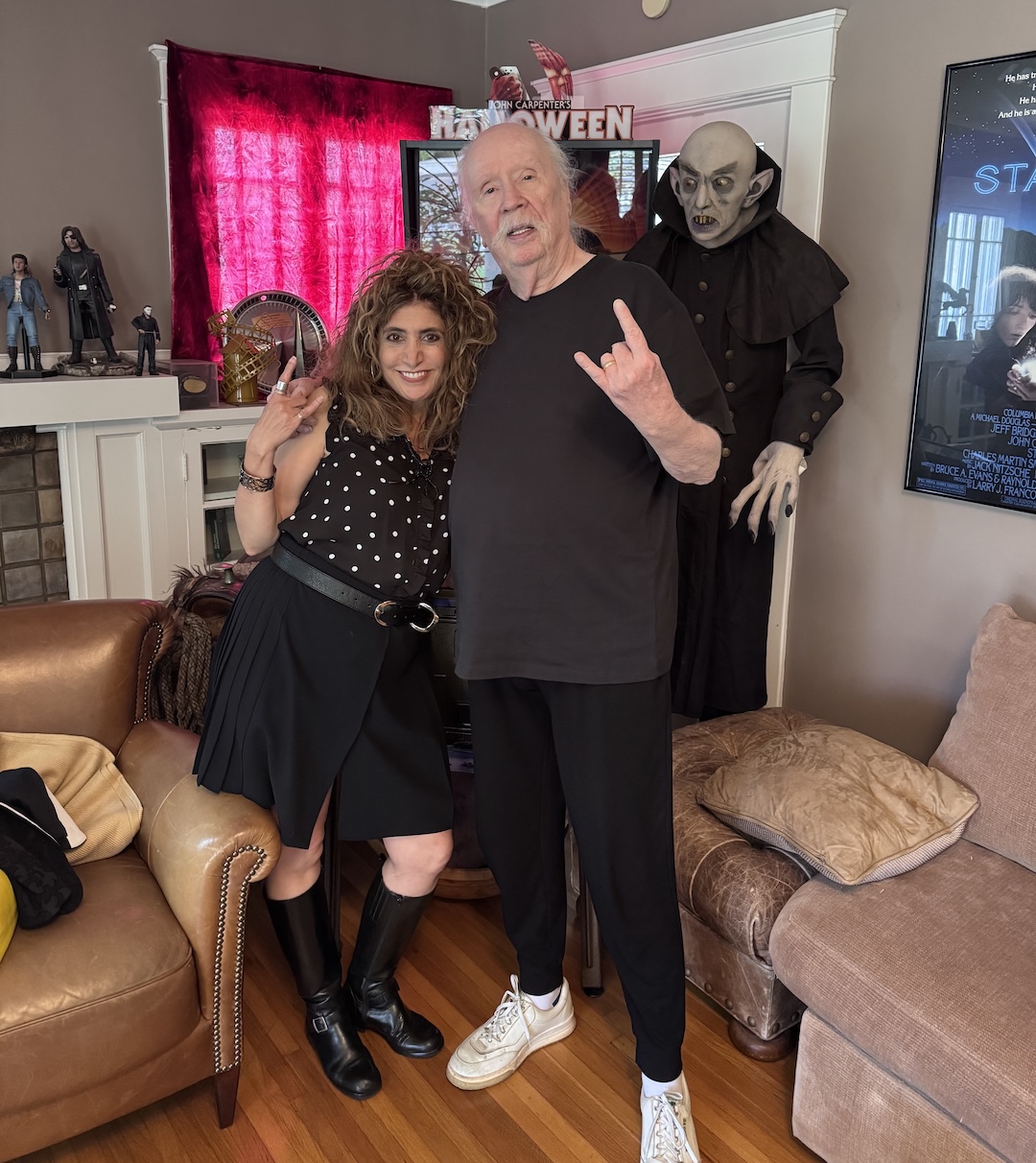
To further avoid rigidity or brittleness, rather than keeping the mix in the box, Spiker summed it through his API The Box II console, an early Overstayer Modular Channel with no metering, and a pair of Pultec EQP-1As across the master bus. This allowed him to be more experimental, particularly as there weren’t any vocals, or, in most cases, a lead instrument to focus on. He incorporated pedals, leaning into distortion and pushing the hardware in a way that he couldn’t in Pro Tools.
“As much as I don’t want it to—because it’s way easier to mix in the box—the console makes a difference,” he says. “Everything hits the Overstayer, and hits it really hard. You can blend the super-fucked-up version of it with the one that’s not. You can ease it up underneath everything and it creates this presence that I haven’t found with another piece of gear.”
• Stevie Wonder Brings ‘Key of Life’ Tour to Europe
Carpenter’s compositions, whether from a half-century ago or today, have a permanence to them, even if they trigger nostalgia for the era in which they were created.
“What you search for as a musician is a timeless quality,” Carpenter says. “Let’s all think of Johann Sebastian Bach. We don’t ask if he changed with the times. We listen to his music, and it moves us close to heaven. I’m nowhere near that, but I’d like to find that place where it doesn’t matter what changes happen. Here’s the music, and it floats above.”