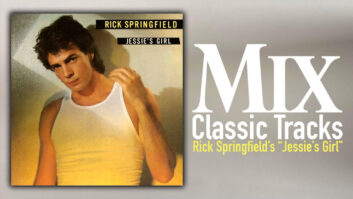
After the success of Killing Me Softly, which was produced by Joel Dorn, Flack, who is credited as Rubina Flake, produced Feel Like Makin’ Love. Flack’s creative process as she works on the song arrangements can be heard on the tapes. “She would stop the recording and say, ‘No, no, this doesn’t feel right. Let’s try that.’ All that is captured to tape,” Mavromatis says. “it’s amazing; I’m getting goosebumps talking about it!”

Indeed, interjections can be heard on both albums. Listen carefully and you’ll hear a count-in to the final chorus of “Killing Me Softly With His Song,” for instance. On “I Can See the Sun in Late December” on Feel Like Makin’ Love, he points out, “She’s on the microphone saying something, and they left it in the stereo recording, so I’ve left those in there.”
The multitracks for both records had good dynamic range, Mavromatis says, “and the clarity was amazing, but there is a difference between the two Atmos versions.” Specifically, there is tape hiss on the Atmos mix of Killing Me Softly because the original recordings had been tweaked to make the tracks brighter and warmer, he says: “So I re-created the hiss and hum of the original 2-track tape machines.”
Before finishing Feel Like Makin’ Love, Mavromatis visited that year’s AES Convention and discussed the idea of reducing or eliminating tape noise for the Atmos versions of catalog projects generally with a few colleagues. The idea met with universal agreement, he reports, so he approached Rhino’s A&R representative about cleaning up this next album. “He agreed that we should not re-create the hiss and hum, which was a brave and forward-looking decision on the label’s part,” he says.

It was brave, he elaborates, because removing the 2-track mixdown machine noise affects the overall timbre of a recording. “You have songs that start with a kick drum, but the kick drum without the noise sounds different. So what do you do? You let it be a little different.”
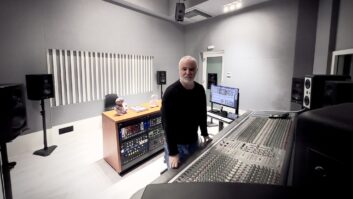
The 2,000-square-foot Living Room Studios is the only Dolby Atmos Music facility in Athens and, Mavromatis reports, currently one of only eight Auro-3D Mix Certified Studios in the world. A full 16 Kali Audio speakers support immersive mixing with a pair of Barefoot Sound speakers for stereo. HdAcoustics performed extensive room modeling to develop the room dimensions and shape, taking full advantage of the 13-foot finished ceiling height. A pair of subwoofers are placed on the ceiling at modal null locations.
Discover more great stories—get a free Mix SmartBrief subscription!
Mavromatis mixes immersive projects in the box in Apple Logic Pro, but has a D&R Cinemix II analog mixing console that he says he might press into service for Atmos mixing one day. Back in the early 2000s, when he was living in Los Angeles—“on the other side of the music industry”—he published a free press magazine, One Way, available in Southern California record stores, which brought him into contact with engineer and producer Ronan Chris Murphy. Mavromatis attended one of his Recording Boot Camps and got to experience the D&R console at Murphy’s studio at the time.
“When I was looking for a console, I thought, ‘They’re European, I’m in Europe, let me look for a D&R—and I found one,” he says. “It’s a 5.1 surround console with 10 auxiliary sends, so I might hack into it and mix Atmos with it—but that’s a project for another time.”