Don’t Pass Up Part One!
LOOK HEAR
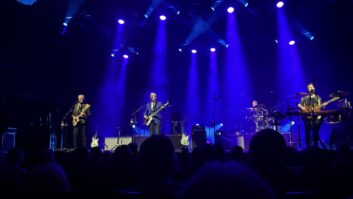
Playing a venue like Harpa is typical of 10cc’s ever-lengthening “Another Bloody Greatest Hits” tour; the journey has included stops at London’s Royal Albert Hall, among other high-profile venues, and while originally due to end this past July, it is currently set to wrap up in February 2027—for now.
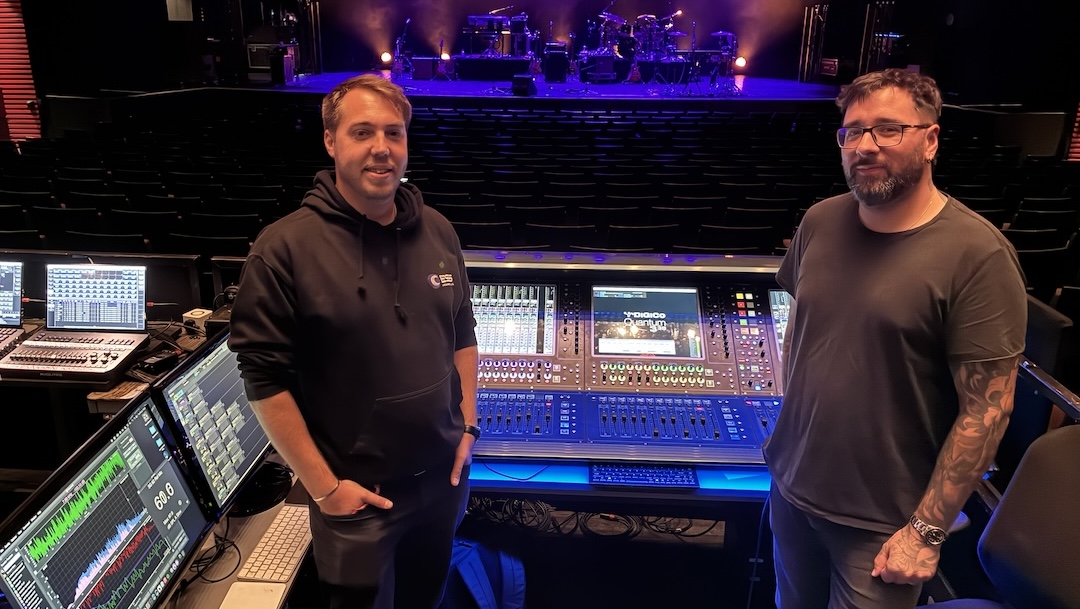
At every stop, the audio pros have specific gear they turn to in order to get the results they need. “We use DiGiCo Quantum Series consoles,” said Low. “I like them for the ease of routing and integrating external processing.” Numerous effects are utilized, with the show requiring a mix of onboard effects including specific reverbs, and then an outboard LiveProfessor processing setup, used to run a Bricasti M7 emulation and a variety of Universal Audio UAD plug-ins.
Other outboard gear put to use at FOH includes a Rupert Neve Designs Portico II Master Buss Processor over the band and a Gainlab Dictator compressor over the vocals. “For fly shows, however, sometimes I have to use plugin chains to replicate this as closely as I can,” said Low.
Miking is always crucial for maintaining consistency from show to show and system to system. When it comes to vocals, in addition to the aforementioned Shure VP88, vocal mic duties are handled with a mix of sE Electronics V7 and Austrian Audio OD505 handheld dynamic mics. And then there’s one other, specialized vocal mic, says Low: “Our distorted vocal that we wired a harp mic to XLR rather than a jack, so the impedance is completely mismatched. It creates a very horrible-sounding vocal for a special effect.”
Elsewhere on stage, the drum kit is surrounded by Austrian Audio OC7s on toms; Austrian Audio OC818s used for overheads and percussion; Shure SM57s placed on snare and distorted drum mic; and a Heil PR 30s that captures snare bottom. Guitars are likewise captured with Heil PR 30s, except for the acoustics, which pass through a mix of Telefunken, Radial and sE Electronics DIs.
• Discover more great stories—get a free Mix SmartBrief subscription!
“All of the mics were chosen just simply because they sounded best in their applications,” Low offered. “The OC7, although quite large, is the best floor tom mic I’ve ever used. I still can’t beat a 57 on a snare—I’ve tried so many others; I just like 57s. For Graham and Rick, the OD505 is just perfect for fitting them into the mix with minimal EQ.”
Given the wide variety of venues and dates that it plays, 10cc doesn’t carry its own P.A., much less to places like Iceland, so using house systems is the norm for the veteran band—and with that in mind, its preferred system for the seated theaters it typically plays is L-Acoustics K3 rigs. “It gives us a little more headroom than KARA and better low to mid definition,” said Low. “However, I’m not a system snob; any good quality P.A. tuned correctly will do the job for us. I always make sure I tune systems to my trace curve to keep things as consistent as possible.”
While consistency is key for the production, keeping things fresh is equally important. “The band plays songs differently sometimes to switch the set up,” Low noted. “There’s two or three versions of some of the songs, and you don’t always know if you’re going to get the rock ‘n’ roll version or the one with a samba section each night, so there’s always some surprises to chase.”
The Harpa concert had its own surprises, too. Feedback coming from Graham Gouldman’s guitar marred the seventh song, “Old Wild Men,” and he stopped the band a minute into it. They tried again; same problem. Gouldman decided to move on. Ten minutes later, they gave it another shot—and succeeded.
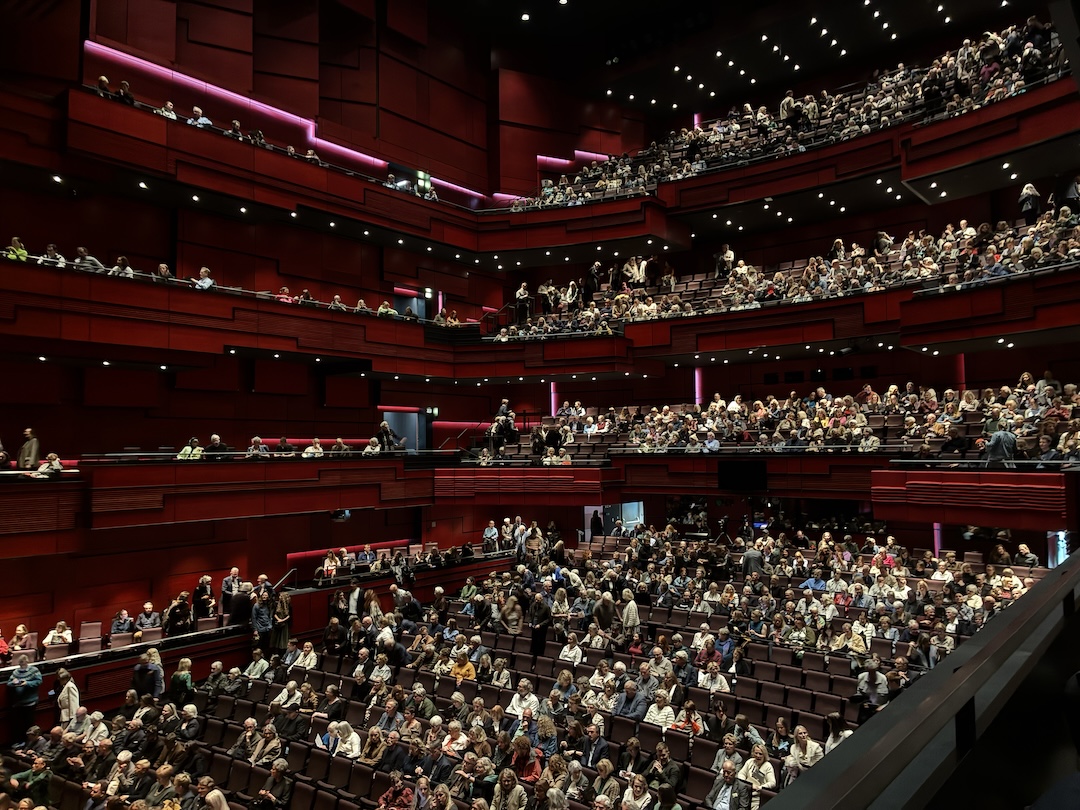
At stageside, the crew determined the guitar problem was in fact a broken tube in a rented guitar amp, so they swapped to an alternate amplifier—problem solved. “[Gouldman is] a realist,” said Low. “He understands what can’t be helped. The whole point of us existing is to keep him from having to deal with these kinds of issues and stresses, so that he can focus on doing what he does musically.”
It’s a process that all involved have down to a science, as Low and Firmston have worked together on 10cc’s live sound for 15 years—a run encompassing more than 300 shows. The effort and its benefits haven’t gone unnoticed. Calling Low and Firmston “meticulous,” Gouldman simply told Mix before show time, “I’ve been blessed with my crew.”