The Bruce Springsteen biopic Springsteen: Deliver Me From Nowhere focuses on The Boss recording both at home and in the studio in 1981 as he struggles to create the songs that will become his stark landmark album Nebraska. Painstakingly recreating the sound of those situations required an army of audio professionals, and over the course of this unprecedented, five-part, 11,000-plus word article, they all weigh in on how they made that happen.
New York, NY (December 15, 2025)—Many music movies follow rockers on the road, but director Scott Cooper’s new film, Springsteen: Deliver Me From Nowhere, follows Bruce Springsteen’s personal journey after he finished his epic 1981 tour supporting The River. Laying low to avoid fans, he settled down in a small house in Colts Neck, New Jersey, to write and record some new songs—the intimate, raw demos that eventually became his Nebraska album.
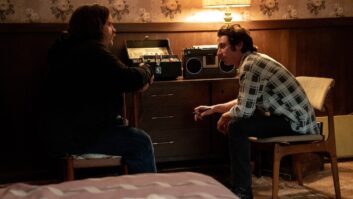
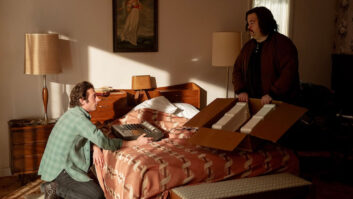
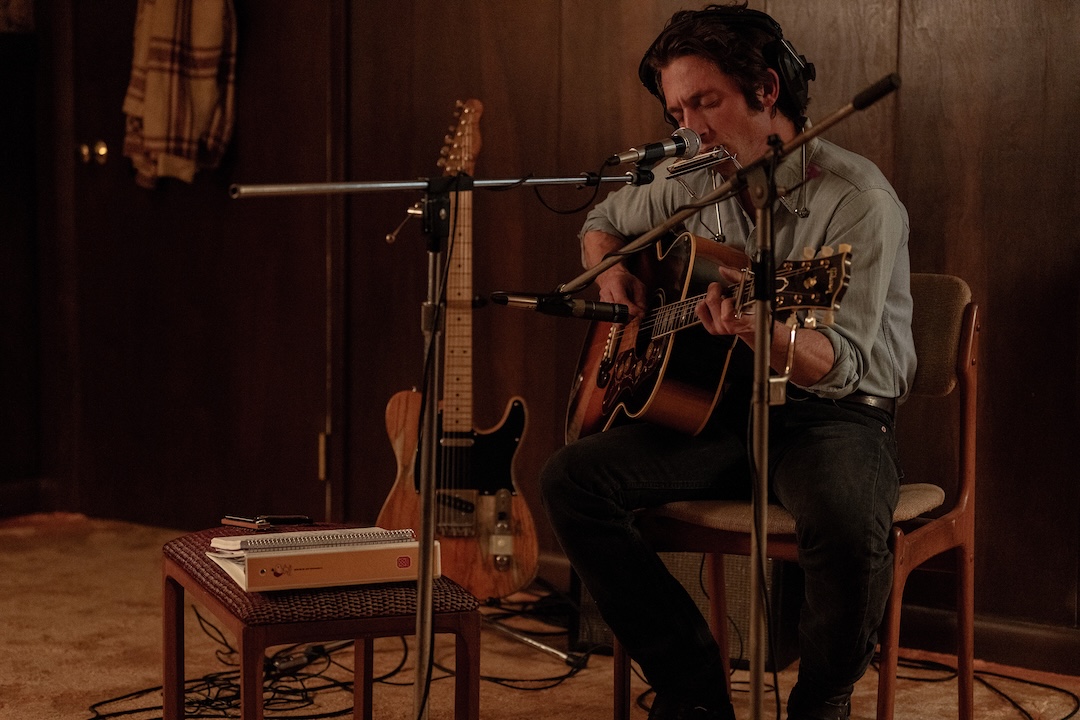
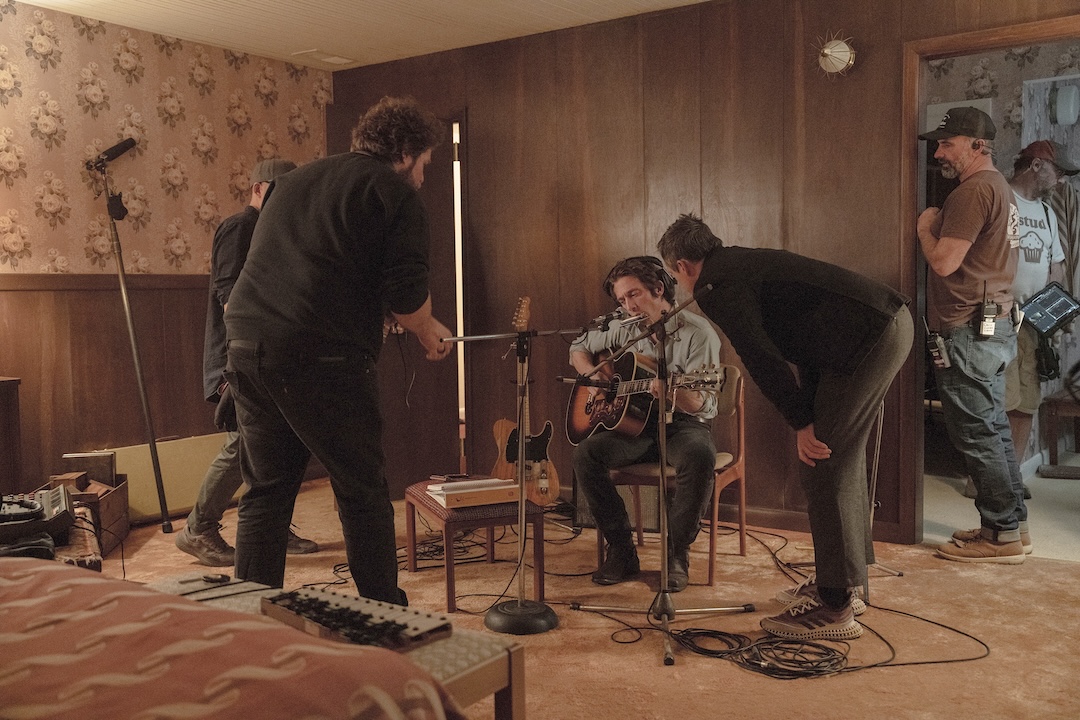
Springsteen sent his assistant/guitar tech, Mike Batlan, to buy a TEAC 144 4-track cassette recorder, and Batlan then assembled a simple recording setup for the singer to use in a bedroom at the Colts Neck house. As shown in the film, he recorded to the 4-track with just a couple of microphones, his acoustic guitar and other miscellaneous instruments, including his faithfully present glockenspiel, and added a few sparse overdubs. Springsteen then created the mixes, getting a basic tape echo effect from an Echoplex EP-3 from his collection of gear, mixed to stereo and recorded onto a water-damaged Panasonic boom box.
When it came time to formally record the songs with the E Street Band over a two-week period at Power Station studios in New York City, Springsteen found that the professional recordings didn’t at all carry the sound or character of his Colts Neck demos. He insisted that those very recordings, kept on a cassette he loosely carried around with him in a pocket—and without its case—be the record that would get released, speed flaws and all. Engineer Chuck Plotkin tried making adjustments, to eliminate distortion and other problems, but it was to no avail. And the masters heard on Nebraska, then, were those very recordings, mastered from the cassette.
Cooper wished to portray that very struggle in his film—and, for fans’ sake, reproduce the music, both live in the “house” set and in the final mixes (both for the film’s own Nebraska album mixes and others)—as authentically as possible. “It was most important for us to make certain it aligned as closely as possible with the sound of Nebraska,” the director explains. “Bruce was searching for the imperfect. It’s easy, today, to make everything sound perfect. We wanted an opposite approach.”
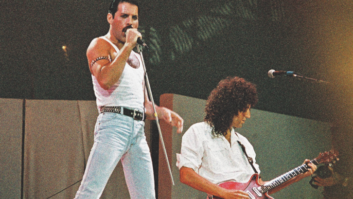
The film’s story is rooted in Warren Zanes’s definitive biography of the period, Deliver Me From Nowhere, and Cooper had identified specific Nebraska tracks in his script that he wanted to show Springsteen, played by actor Jeremy Allen White, writing and recording at Colts Neck. Other songs which would appear in the film included a live performance by Springsteen and the E Street Band of “Born to Run,” a studio recording performance of “Born in the U.S.A.” and Springsteen playing live with some friends, a local band called Cats on a Smooth Surface, at the now-legendary The Stone Pony club in downtown Asbury Park.
NEW JERSEY VIA NASHVILLE
Cooper turned to Nashville-based record producer Dave Cobb to help create pre-records for each of the performances (though, when White is seen recording in the bedroom set at Colts Neck, he is indeed singing/playing live to camera). “I was a fan of Dave’s,” the director states. “He’s produced Chris Stapleton and Greta Van Fleet,” the latter who would appear in the film as the local band, “and just has a lifelong love of the same type of music I do. And he is as tirelessly a perfectionist as Bruce Springsteen and I am.”
During the pandemic, Cobb had actually worked with Springsteen himself, creating test mixes for some potential solo record material for The Boss. “We talked via Zoom a couple of times,” the producer recalls, “and I just found him so unbelievably knowledgeable about music history, and the reasons records felt the way they did. He was so endearing and honest, that when the request came, through my agent, of course, I immediately said yes.”
Cobb brought in his longtime engineer friend, Greg Koller, to help make a test recording at the historic RCA Studios Nashville Studio A—Cobb’s longtime home base. The two had known each other socially since Cobb’s days in Los Angeles, back in 2008 and then eventually working together on projects over the years. The producer first drafted a few basic templates of each of the film’s songs at Savannah, GA’s Georgia May Studio, which he sent to his engineer in mid-August 2024, to get familiar with the material.
• Bruce Springsteen Gets Loud in the Library
Also getting familiar with the songs was the film’s lead, White, who’d been working for some time with vocal coach Eric Vetro. With that in mind, Cobb’s first step was to get White into Studio A to assess where his singing and playing level was. “In the beginning,” says Koller, “I don’t think we knew what was going to be pre-recorded and what would be played live. It was all dependent on where Jeremy was at with his singing and guitar playing.”
Cobb elaborated, “Bruce’s is such an iconic voice, unmistakable and extremely difficult to reproduce, so the first step was to get in and find a way to make it sound as authentic as possible.”
While Cooper and White arrived for the test recording on Monday, September 9, 2024, seven weeks before start of production, Koller came a few days earlier to try out a TEAC 144 that Cobb had gotten a hold of, curious to see if the recordings, for authenticity’s sake, could indeed be made onto the 4-track. “Everyone had those,” says Cobb. “I got one as a gift, instead of a guitar, way back when. That’s where it all starts.”
It was quickly found, though, that the 4-track had limitations that would impede making proper pre-records. “We knew we would A) need to be able to punch in, and B) need to comp, and you can’t do either of those with the 4-track,” Koller explains. It was decided instead to track the recordings to Pro Tools, and then transfer them to the 4-track, to capture the effects that device’s specific mechanics and electronics could provide.
THE MOMENT OF TRUTH
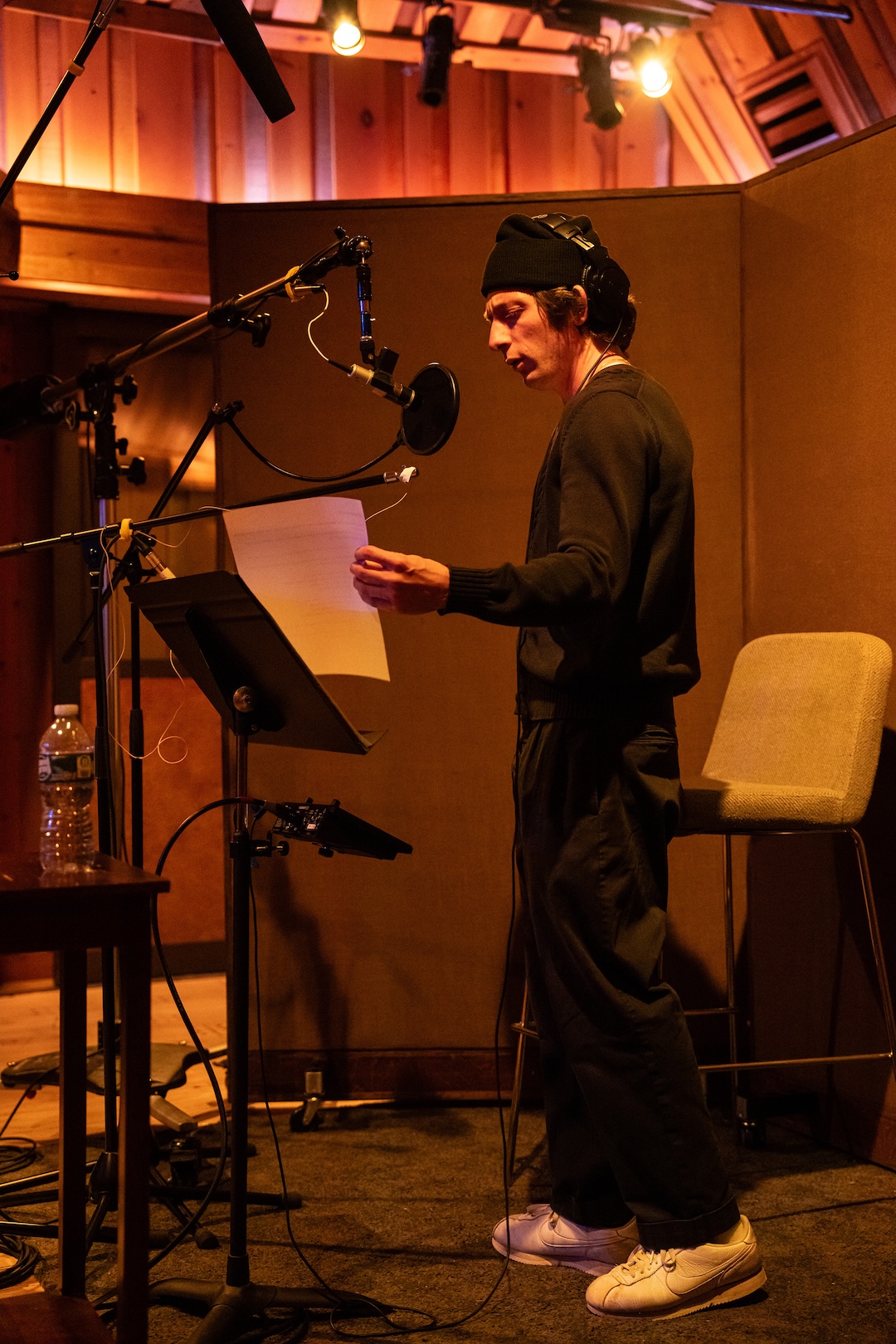
When White arrived, no one knew what to expect. “He had never been in a studio before, so we didn’t know how he was going to sing,” says Koller. “To sit in that giant room, RCA Studio A, and have a producer, the director, engineers and movie people staring at you—that would be pretty intimidating for anyone.”
The team had set up a small vocal recording area for him to sing, complete with an original Unidyne 545 mic, similar to today’s Shure SM57. “I’m assuming that’s what Bruce probably had—either an older 57 or a 545,” the engineer says. He put the Shure through an API mic pre, as well as an 1176 peak limiter, “not really for tone, but because with Jeremy not being a regular singer, we needed to make sure to protect against peaks.”
The test track was the song, “Nebraska,” recorded in a brief two-to-three-hour session. “We had Bruce’s original track ready, in case he needed to hear the phrasings or inflections Bruce had in his voice, some of which are very hard, very particular to that record,” Koller notes. “We played that back for him, and when Jeremy started singing, all our jaws dropped. We looked at each other and said, ‘What??’ We were all really impressed. He was able to nail some of those very untraditional musical phrasings, something most musicians wouldn’t get. That was one of the advantages of Jeremy not being a trained musician his whole life—a trained musician would find it tough to un-learn traditional phrasings, and he just nailed it. When he was done, Dave and I just looked at each other and went, ‘Okay, this is going to work.’”
Up until that time, it wasn’t 100% certain how the pre-records would be used, but, says Cooper, “Once we heard him singing ‘Nebraska,’ it was very apparent it could change our approach to the film.”
Discover more great stories—get a free Mix SmartBrief subscription!
Once completed, Cobb and Koller turned to another veteran whom they had brought along—Pro Tools editor Eric Caudieux (or “French Eric,” as the pair affectionately called him)—to apply specific tuning to White’s vocal recording. “Eric first made a comp from various takes of Jeremy and then applied tuning tools he’s just an absolute expert at,” Koller explains. “Eric was one of the original Pro Tools editors who just about lived at A&M during the 1990s working on some very big rock records.” Here, applying things such as AutoTune and RePitch, he did the opposite of what one would expect. “In some cases, on the original recordings, Bruce is not perfectly on pitch, so what Eric did was not to make Jeremy perfectly on pitch, but to make sure it didn’t sound perfectly on pitch, to make sure it didn’t sound tuned, something Eric is very good at.” The tracks were then transferred to the TEAC, adjustments were made and a mix was prepared.
The two stayed up all night working on the track, as Cobb notes, “cracking the code to get that sound. The next day, we came in and we played it for Jeremy and Scott, and everyone was just, like, ‘Oh, my God. This is really going to work.’” At the end of the session, Koller gave White the 4-track cassette as a souvenir. “It was a beautiful moment,” Cobb says.