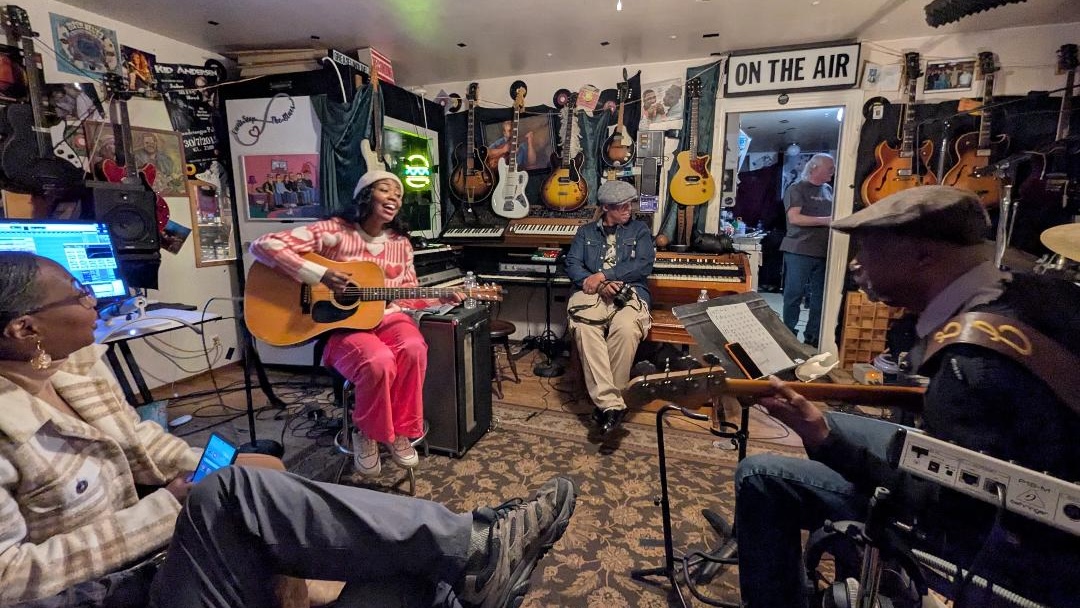
Oakland, CA (February 24, 2026)—Lives can change in an instant. For singer-songwriter Nia Cephas, still a few years shy of 30, it’s already happened twice.
In 2019, the young music school graduate was in a horrific car accident and, among other injuries, lost the ability to control her right arm, meaning the loss of her ability to play guitar, too. Then, one day five years later, while still healing and re-learning how to pick and strum, her life changed again—a complete 180, this time thanks to a song.
As the story goes, the award-winning blues singer known as Alabama Mike (or, just Bama), now living in Oakland, Calif., was visiting a cousin one day, and while hanging in the front yard he heard Cephas singing through an open window across the street. He invited her over to sit in and jam with them. At first, she says, she was reluctant; she had barely left her house in three years. She had titanium in her femurs and severed nerves and shattered bones in her dominant hand. She did join them, however, and after overcoming her shyness, she broke out “400 Years,” a song she had written.
Looking back, she says, “Every moment has been a gift since then.”
She met up with Alabama Mike again the following day. They jammed, and through him, she met Jim Pugh, head of the Bay Area-based nonprofit record label Little Village Foundation. After hearing Cephas sing “400 Years,” Pugh asked for demos. After hearing the demos, he wanted to make a record.
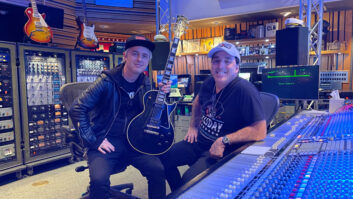
Produced by Pugh, Alabama Mike and engineer Kid Andersen, Cosmicpolitan showcases Cephas’ thoughtful, deep and poignant songs across multiple genres, ranging from Middle Eastern, samba and bossa nova, to jazz, pop and world beats. It was tracked and mixed over the course of a year at Andersen’s Greaseland Studios in nearby San Jose, and released by Little Village last November.
RECORDING WITH KID
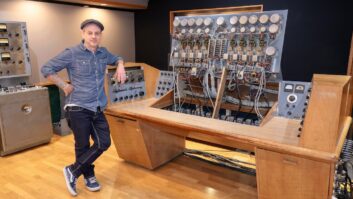
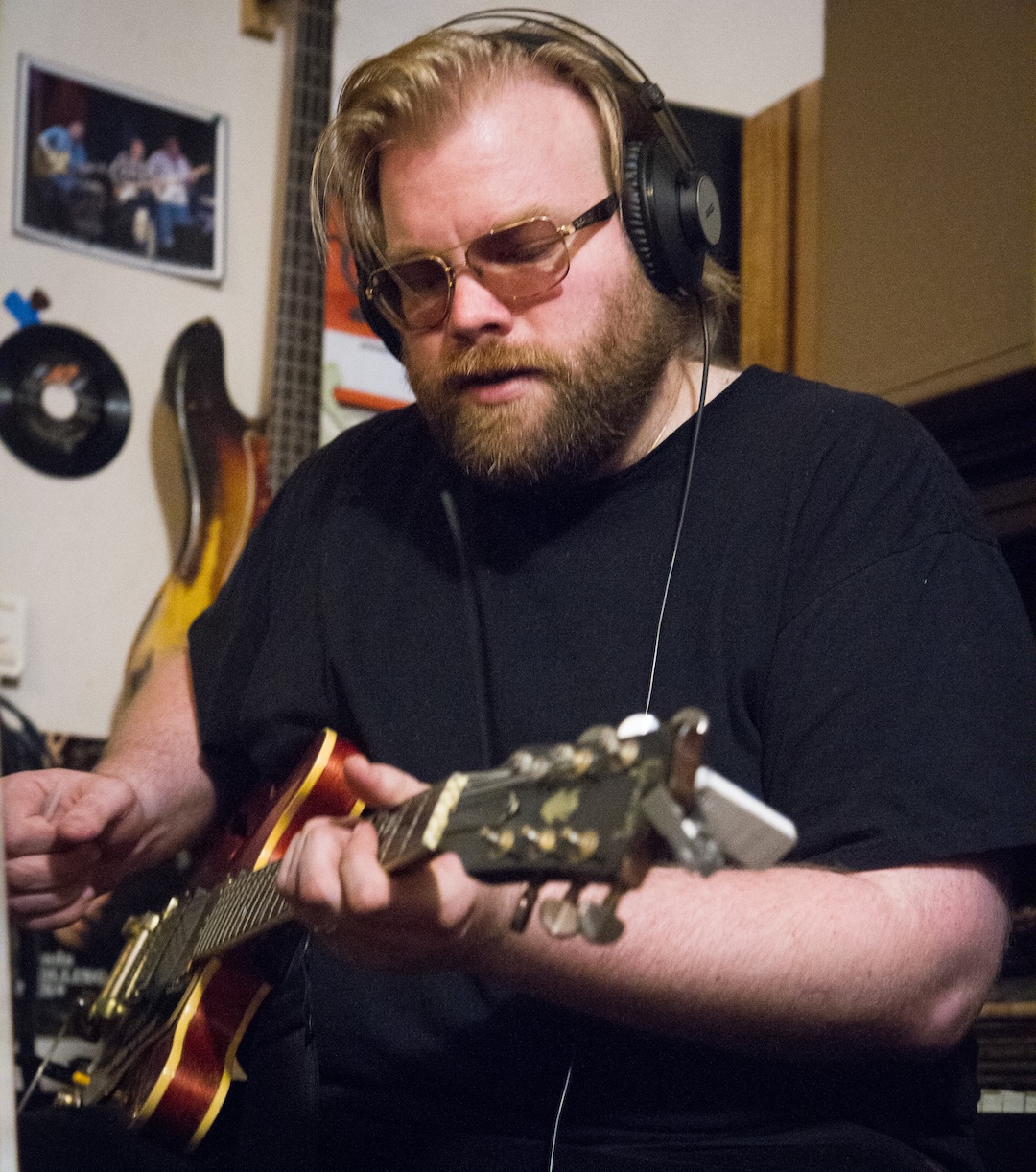
American artist R.C. Finnigan bestowed Norway-born Christoffer Andersen with his nickname “Kid” on the guitar player’s very first gig in Oslo at age 19. After moving to the United States in 2001, Andersen quickly established himself as a blues guitarist and ultimately settled in Northern California, where he converted his San Jose home into Greaseland Studios, best known for recording the blues, which Andersen describes as his “mother tongue.”
The musician/engineer doesn’t limit himself, however, and he’s not unprepared. He feels that it’s a studio owner’s responsibility to offer a wide array of instruments, so besides a wealth of guitars, drums, keys and the like, his collection includes sitars, ouds and even a Turkish saz, which he is rumored to play every once in a while.
“When we were doing some additional overdubs, like on ‘Borderlines,’ I didn’t know exactly what [Nia] was talking about,” Andersen confesses. “Originally, I thought she was talking about the border of Mexico, and we would put a Spanish guitar on it. So I asked, ‘Which border, which region are we in?’ She said ‘The Middle East.’ I said, ‘Cool, I can get out my saz.’ Also, I recently got one of those new digital M4000 Mellotrons, the one that has samples of all the old Mellotrons. It has such a vibe, and it worked really well for a lot of her music.”
Cephas admits that her freshman experience in a recording studio was a bit daunting, noting, “I was excited, but I felt like a fish out of water.”
Still, she wasn’t alone. Her mother and first music teacher, Rosane Duarte, ended up playing piano and singing backgrounds on “Borderlines” and a few others after Andersen heard her noodling around during a break in the studio one day.
The tracking sessions were also a bit daunting for Andersen, as Cephas’ songs are unconventionally crafted, with multiple time and rhythm changes within various sections of one song, making it challenging for the musicians to follow. Thankfully, Andersen says, drummer Gary Novak was able to figure out how to create the bed to make it all work. Still, he adds, that meant they weren’t able to record completely live, as he often prefers.
“On the first session we did, we had Gary in the back and Jerry (Jemmott) on bass and Jon Otis on percussion,” Andersen recalls. “There were a variety of thoughts on exactly how we would track things. Some of the songs had so many tempo changes, and were so daunting to so many of us, that we did the basic track with just Nia playing acoustic guitar and singing and Gary playing drums. Then we would overdub a bass part on that, and then all the rest later. On some songs, we ended up having Nia do another vocal and or guitar on that track. It had its challenges because the original track is Gary chasing Nia, and then if she overdubbed on that, it was Nia chasing Gary, chasing Nia.
To capture Cephas’ vocals on tracks 4, 5, 6, 8 and 10, Andersen set up a Bock 507 (U 47-type) microphone, which he had purchased from David Bock himself, he notes proudly. On the other cuts, he used an early-1960s Neumann U 67, purchased from his mentor, Alan Goldwater, who had reportedly bought it from Sam Phillips at Sun Studios. The vocal from either mic then went through a vintage Telefunken V72 preamp, racked and serviced by Marquette Audio, into a vintage Teletronix LA-2A limiter, into a UA Apollo 16 interface.
“Nia’s guitar was recorded with the same mics as the vocal,” the engineer adds. “If we re-did a part, it was the Bock. Everything that went down live was a combo of the guitar coming through the vocal mic, and the guitar’s pickup system through a new Neve DI, into probably a stock Apollo preamp.”
ALWAYS MIXING
Andersen mixed the record entirely in the box, making use of plug-ins from Universal Audio, SSL, Waves, Soundtoys, Altiverb (Audio Ease), OekSound (soothe) and Sonnox. But he declares, the mix actually starts during the recording.
“We’re always mixing; it’s fitting music together in the optimal way,” he explains. “When I tell the bass player, ‘Hey, can you play half-time on this because it’s a little busy,’ that’s mixing. I believe every musician should always be cognizant of the whole mix, everything around them, and play in a mindful manner. Everybody needs to listen. You should always use more of your brain power to listen to what’s going on than use that brain power for actually executing what you need to play. The ideal situation is that I’m trying to make it sound like what you hear is exactly what happened.
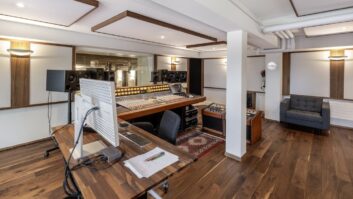
“Sometimes I do my job from the control room I have in the backyard,” he continues. “That’s where my rack is and my computer and everything. I also have a mirrored computer screen and speakers out in the living room, or main tracking area, so if I’m playing, I can be out there tracking and engineering.”
• Inside The All-New Ayan Mastering
Little Village Foundation supports a number of artists by funding their projects, allowing them to retain rights to their music and all earnings from the project. The label also helps with promotion and exposure/bookings. It’s an open secret that they are happy with their role in breaking young artists and providing potential life-changing opportunities, fully expecting them to move on up.
“It was everything that I imagined it would be,” Cephas says of her first real recording experience, “but it was also so much more because I never accounted for the role the producer played, especially an experienced producer like Kid. He literally blew my mind.
The record sounds 10 times better than I could have imagined, but also, it’s exactly what I hoped for!”