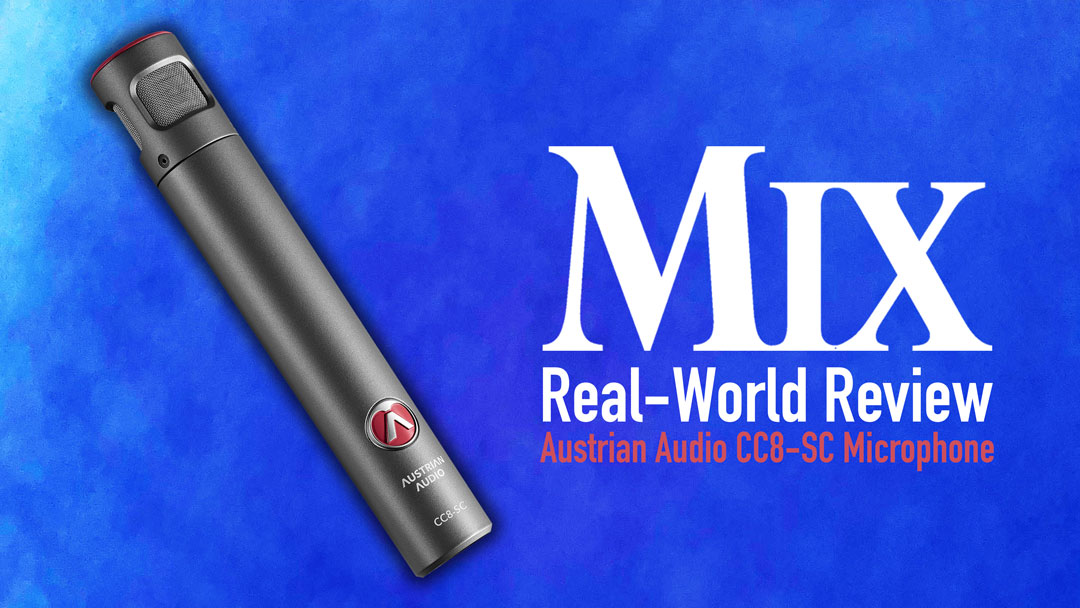
| MIX VERDICT: Austrian Audio CC8-SC Super-Cardioid Mic |
| THE TAKEAWAY: “I think the new CC8-SC is a great choice as a useful multi-purpose pencil mic with numerous possibilities due its polar-pattern pickup.” |
| COMPANY: Austrian Audio • www.austrian.audio PRICE: $599 MSRP PROS: • An all-around utilitarian tool for recording acoustic instruments and loud drum kits. CONS: • Silk-screened labeling for the pad and HPF settings are hard to read. |
New York, NY (February 5, 2026)—Having many microphone choices on hand is always a good thing, but interchangeability between them is not guaranteed. Slightly different polar patterns, output levels, capsule models and overall specifications have to be considered. Austrian Audio uses its flagship CC8 cardioid pencil condenser mic as the basis for the new CC8-SC super-cardioid model, all but eliminating interchangeability issues. It also helps that both were inspired by the legendary CK1 capsule used in the classic AKG C-451/452 mics.
Small-diaphragm condenser microphones are often used as spot microphones when recording large orchestras or smaller string sections for additional presence and focus in support of a better overall balanced recording. The detailed sound reproduction possible with small-diaphragm condensers makes them ideal for recording acoustic guitars, string instruments or light percussion. They will also cover louder sources well, finding use as overheads on drum kits, in tight on individual drums or inside a close-miked piano. SDCs are known for capturing spatial detail and fast transient peaks distortion-free.

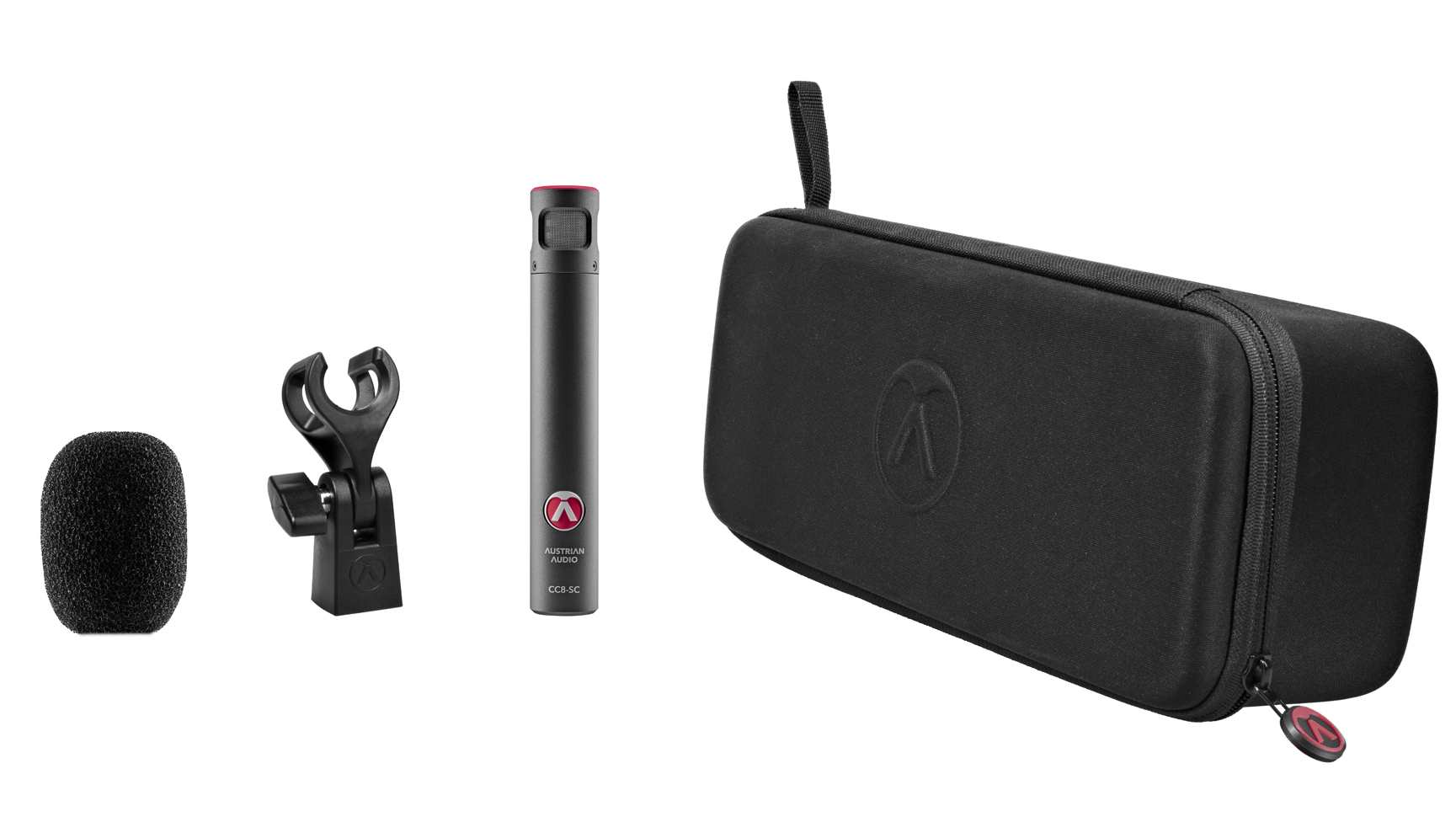
The CC8-SC is physically identical to the CC8. Both are 140mm long, fit with the same accessories and weigh 140 grams. Each has a sturdy metal case with a vented outer sleeve protecting the capsule. Like the CC8, the CC8-SC uses the newly developed OCC7 condenser capsule, incorporating an edge-terminated, gold-sputtered PEN (Polyethylene Naphthalate) diaphragm nearly 13mm in diameter and 3 microns thick.
The CC8-SC uses a transformerless FET circuit for a wide dynamic range and will handle sound pressure levels up to 155 dB SPL, with a self-noise of only 13 dBA and a sensitivity of 18 mV/Pa. Even though it uses the same electronics as the CC8, the CC8-SC has a higher sensitivity and lower noise floor because of the higher acoustic gain from the super-cardioid capsule.
CARDIOID, SUPER-CARDIOID, HYPER-CARDIOID
A definition of terms here. A cardioid mic picks up in a wide “heart-shaped” polar pattern that is sensitive to sound coming into the front and least sensitive at 180 degrees, or, the rear. A supercardioid mic has a more focused, narrower front pickup of about 115 degrees. It is least sensitive at 125 degrees on the sides and not very sensitive at all at the rear. A hyper-cardioid mic has an even narrower pickup of about 105 degrees in the front but is more sensitive at its rear than a super-cardioid.
The CC8-SC’s super-cardioid polar pattern makes the CC8- SC block sound coming from the sides and rear of the mic. The second-order, high-pass filter (bass cut) is switchable. At the Off position, the microphone’s response at 20 Hz is -3 dB down. Position 2, at 60 Hz, is -3 dB, and position 3, it’s 120 Hz, -3 dB. There are three attenuation pad choices: 0 dB (none), -10 dB and -20 dB. Both the CC8 and CC8-SC are factory-calibrated with sensitivities matched within ±0.5 dB. A brand-new CC8-SC, therefore, will match any older CC8 within ±0.5 dB at 1 kHz and work as a “matched pair.”
IN THE STUDIO
The CC8-SC proved excellent for rejecting my small overdub room’s boxy sound when recording a 1973 Epiphone FJ-570 Jumbo acoustic guitar. I used a Retro Instruments Powerstrip tube channel with no EQ and only a little compression for a rhythm guitar part. I placed the mic about 18 inches from the player, pointed at where the neck joins the body. Even at that distance, this full-sounding guitar required the high-pass filter set to 60 Hz.
The tight pickup pattern allowed for many different tonality choices by aiming the mic slightly toward the bridge for a brighter sound or up the neck for less treble but more fret noise. The 115-degree pickup pattern meant that there was less surrounding room tone; reflections coming from the walls and ceiling resulted in a tight, present sound. The CC8- SC’s directivity was apparent when I stood at the rear of the mic and started talking during the recording; on playback, my voice was barely heard.
I tried recording a solo violin in the same room with the same recording chain (without compression or EQ) as the acoustic guitar. The CC8-SC was placed about four feet over the standing player’s head. The sound was transparent and the super-cardioid pattern offered distinct choices in tonalities just by having the player move from directly under the mic to an off-axis position—about two to three feet to one side. The recording level didn’t change much but the dynamics and the overall internal balance of the instrument was more even and fit within the track better. Playing directly under the CC8-8C produced “hot” note peaks caused by room resonances. More importantly, this problem was heard immediately in the control room, prompting the move.
Next test was for close-miking a snare drum within a basic kit—kick, snare, hi-hat, rack toms, toms and overheads. I positioned the CC8-SC about three fingerwidths away from the drum’s rim and pointed at the center of the head. Here again, exact positioning is more critical than when using a cardioid condenser, and just like the recording of the solo violin, I had choices depending on the drummer’s style, where he/ she hits the drum, and how hard of an attack the song needed. Having these choices is great for a recording engineer.
• Audiotonix Acquires DPA, Wisycom and Austrian Audio
When close-miking, I used a small jeweler’s screwdriver to toggle one of the mic’s three attenuator choices. These switches are recessed to prevent accidental changes—good idea, but I think the silk-screened labeling should be easier to see in a darkened studio. Set to the 0 dB (no attenuation) position produced consistent peak overloads (clip) on every drum hit. Changing to the -10 dB pad was better for only occasional red peaks on the Trident console’s mic preamp, set to minimum gain and with no pad. I found the 60Hz HPF position worked well for a tighter sound and also for reducing kick drum leakage without affecting the snare drum’s sound itself.
I found the CC8-SC to be a fat-sounding mic during all three sessions I used it on for this review. Even with hard hi-hat bashing, the mic’s sharp pickup pattern reduced spill coming in from the side significantly when used on loud-playing drummers.
Discover more great stories—get a free Mix SmartBrief subscription!
I think the new CC8-SC is a great choice as a useful multi-purpose pencil mic with numerous possibilities due its polar-pattern pickup. It is small, unobtrusive and easy to fit into drum kits or close into acoustic guitars, or to tuck under the lid of a grand piano. Its immediate interchangeability with the CC8 is a big plus! I have no complaints.