Don’t Pass Up Part Two!
ANALOG FOUNDATION, MODERN WORKFLOW
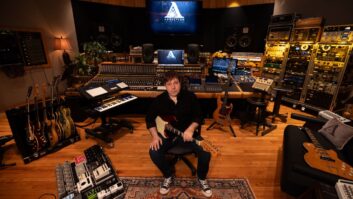
At first glance, there’s a decidedly analog feel to Addiction Sound, starting with the 38-channel Trident TSM console that began life at Record Plant Sausalito on sessions with the likes of Rick James, Jefferson Airplane, Santana and Journey, up to the soffit-mounted ATC 300 main monitors, then on to the three-tower outboard rack, back to the 7-foot Yamaha grand piano, and finally resting on a 1939 record lathe and the multiple analog tape machines, including a Studer B67.
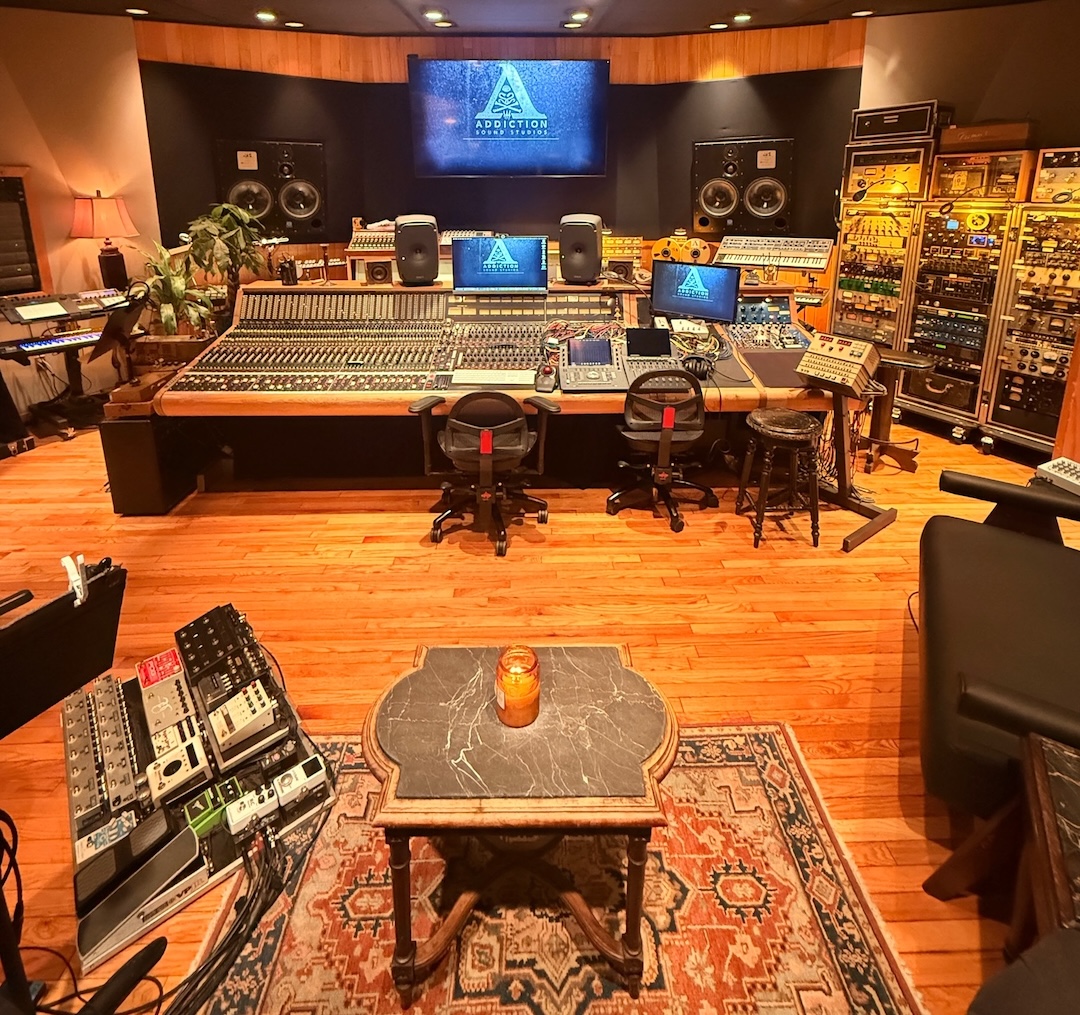
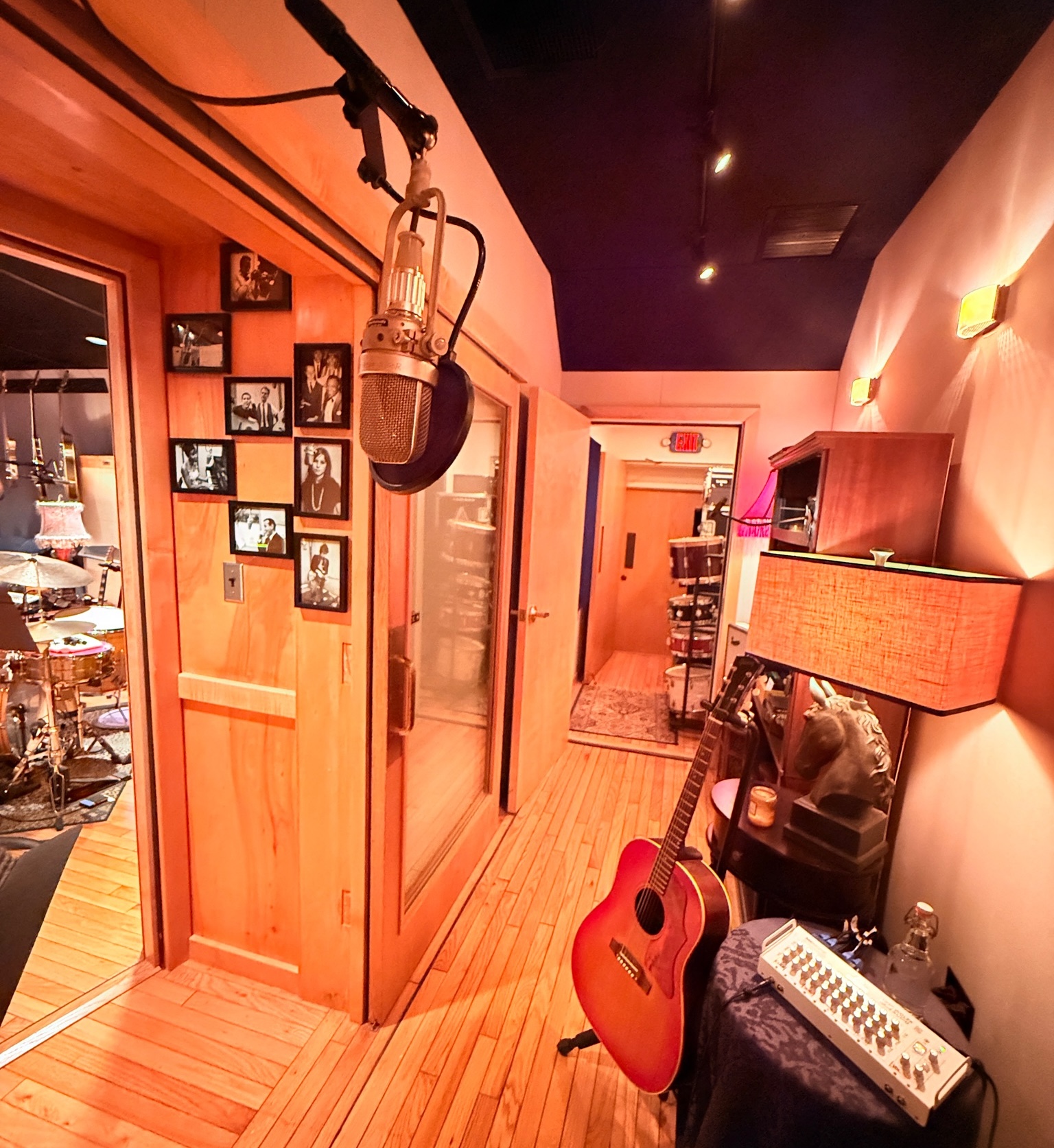
The room is packed with gear, yet never feels cluttered—and every piece of gear has a story. There’s the first Reverbophone in the U.S., serial no. 001; compressors from David Briggs’ House of David; a plate reverb from RCA; a 1957 Neumann M49 mic in the vocal booth from Columbia Studios on 30th Street; Tube-Tech; Tutti mic preamps from Sunset Sound; classic Neve 33109s; vintage Wurlitzer; Prophet-5s and a Jupiter-8; custom Craviotto drum kits (he has a partnership with the company); and dozens more examples. If an artist wants to swap a unit out, there are more in nearby storage.
• Discover more pro audio news—get a free Mix SmartBrief subscription!
Still, Kalmusky is hardly a Luddite trying to re-create a lost golden age; he is extremely tech-savvy and is in the process of developing his first set of Addiction/Kalmusky plug-ins with Kazrog, based around his use of reverb. He is equally conversant in Pro Tools, Ableton, Kontakt and Logic—there’s even a “Logic” button on the Trident for when he puts on his songwriter cap.
“We’re writing in Logic and Ableton, but I still prefer to mix in Pro Tools,” Kalmusky says, “so when everyone leaves at the end of the day, my assistant will dump everything into Pro Tools for me to mix. But while I’m creating and producing and using virtual instruments, I’m very much an in-the-box music producer, even in this space, especially when it comes to making extremely modern pop music.
• Eminem Track Leak Case May Get Guilty Plea
“A lot of young bands are into being bands,” he adds. “They want to play guitar and bass and drums, and they’re into the history of music— every era of music, from the 1950s up to today. I have all of that stuff in this room, and it’s not sample packs and emulations. It’s the gear the emulations come from! They can play a real Wurlitzer. They can sit down on a real drum kit. We can record to real analog tape. Recently, I actually made a bunch of 808 samples out of hitting things with mallets around the room, and we built a hip-hop track that is so unique and current and really interesting. It sounds cutting-edge and modern—and the nice thing about it is no one else in the world has these sounds because we actually made them all.”
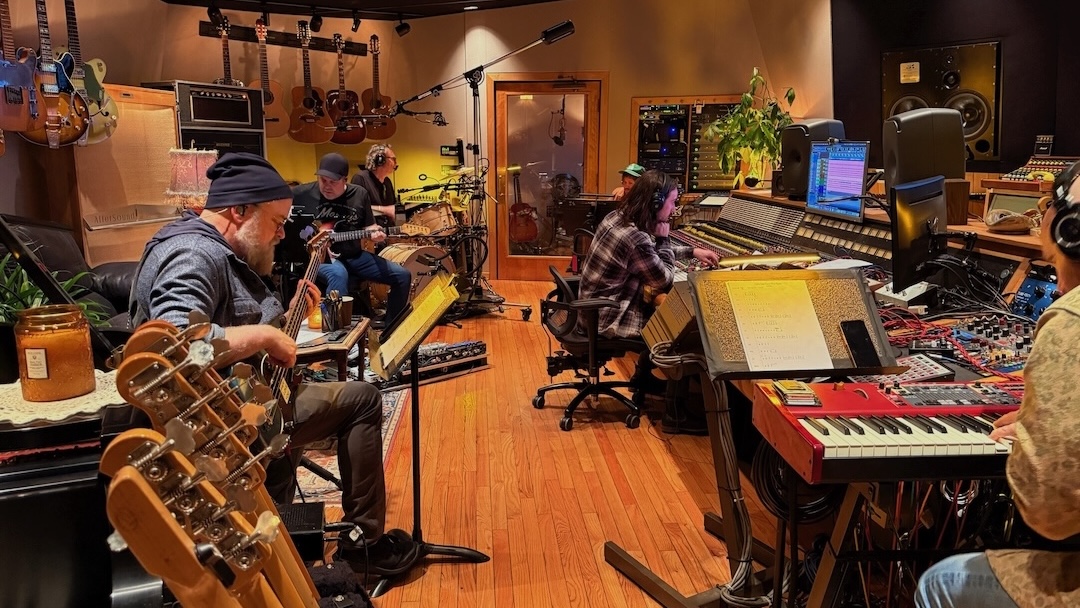
While the production/mix room setup reflects a blend of past and present, a 7.1.4 Dolby Atmos mix room down the hall could be said to represent the future. And it feels completely natural to find a ¼-inch reel-to-reel tape machine to the right of the Avid controller, and a turntable against the left wall.