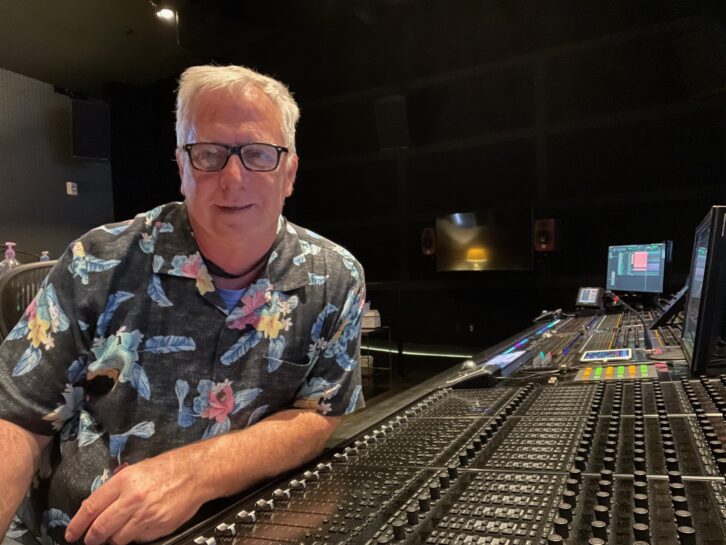
Hollywood, Calif. (October 6, 2025)―Veteran re-recording mixer and supervising sound editor Doug Mountain has become a key figure in remixing many studios’ historic film libraries for immersive sound formats, often leaning on Nugen Audio’s Halo Upmix plug-in.
Over a 40-year career, Mountain has worked on series like Community, The Walking Dead and All American and has served as a consulting engineer for the Grammy Awards for over 25 years. Today, he is widely known as what he jokingly calls “the Atmos Remix King,” with nearly 40 feature film remixes under his belt.
At the heart of Mountain’s workflow is a selection of Nugen Audio plug-ins, including Halo Upmix. “Halo Upmix is the cornerstone of what I do,” he says “It’s instrumental, especially for music upmixing and backgrounds. It provides a fuller, smoother sounding upmix compared to a lot of other similar tools out there.”
He often works with limited source material, such as mono dialogue, isolated music and effects stems or legacy 5.1 mixes. His goal is to breathe new life into these elements without compromising their historical integrity.
“A lot of mixes from the ‘90s have strong front and rear elements, but we’re missing the middle of the room,” he says. “Halo Upmix helps fill that space and makes the soundstage feel complete. It tells me what’s missing and helps build it up naturally.”
Mountain’s past projects include Twister, Enter the Dragon and High Society. A more recent highlight is the re-release of Purple Rain, which was screened in Dolby Atmos for one night only at select AMC theaters across the U.S. For Mountain, the emotional experience of that film was paramount, which is where Halo Upmix shined. “When you wrap the music around the audience using Halo Upmix, you intensify the emotional experience,” he explains. “It doesn’t just come from all speakers—it envelops you in a way that feels natural and powerful.”
Discover more great stories—get a free Mix SmartBrief subscription!
Mountain and his team had to follow strict guidelines to ensure they remained faithful to the original audio experience. “We don’t have to reinvent the wheel or become a revisionist,” he says. “Our job is to restore the soundtrack to how people remember it, which is often better than it originally was.”