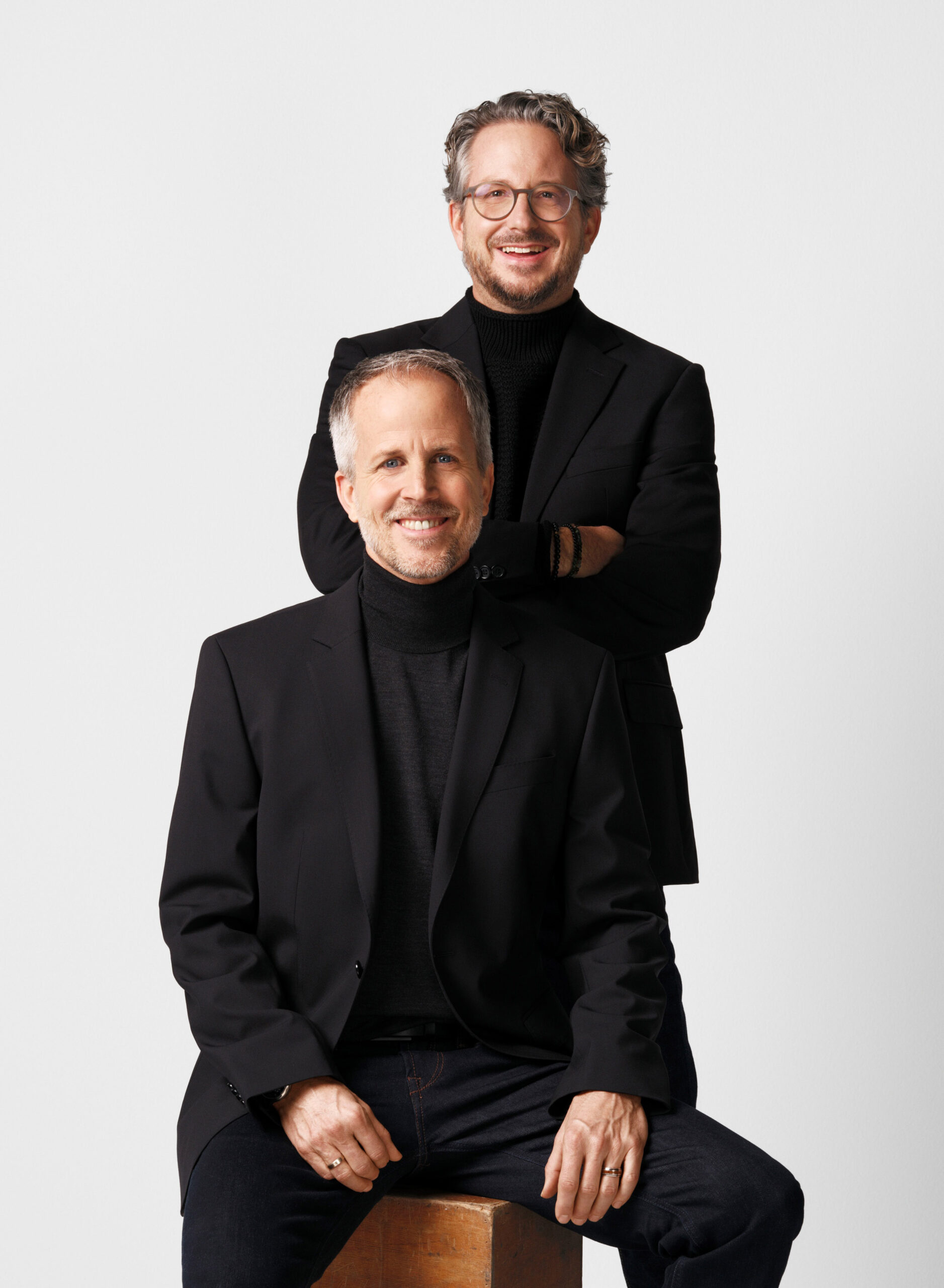
Wedemark, Germany (September 22, 2025)—When Fritz Sennheiser founded his eponymous company in 1945, the first product out the door was a voltmeter, but a year later, the German manufacturer produced a broadcast microphone—its first step toward becoming one of the best-known pro-audio brands in the world. Eighty years later, that journey continues and third-generation co-CEOs Andreas and Daniel Sennheiser see a bright future ahead for the industry mainstay.
These days, Sennheiser is involved in many spaces—pro-audio, content creation, immersive sound and even in-car audio—but the CEOs say the company’s approach to every market has always been to focus on customer needs.
Andreas notes, “We have two or three examples which really transformed the industry. One was in 1957, bringing out the first wireless microphone— that was the first of its kind and allowed everybody on stage or in front of a TV camera to roam freely without a cord attached, unleashing the creative potential of whoever was on stage there. The second example is a shotgun microphone in the 1970s—close-miking was no longer needed, so the whole film world could record scenes from a distance and get close-up audio…. [Now,] with Spectera, it was it was time to think differently.”
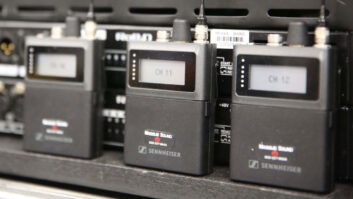
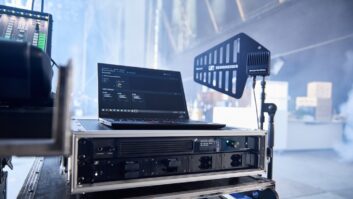
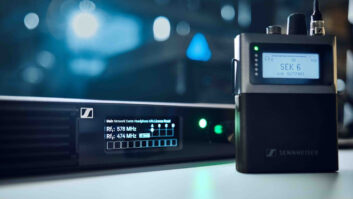
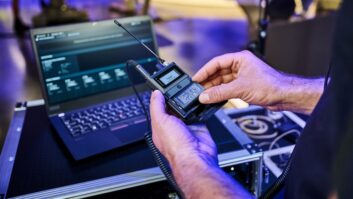
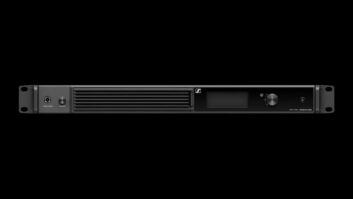
Spectera, introduced last year, is Sennheiser’s bidirectional wideband solution for wireless products like mics and IEMs, based around the WMAS (Wireless Multichannel Audio Systems) protocol. Approved by the FCC in early 2024, WMAS is a more spectrally efficient process than previous RF methods but was only given the green light after years of campaigning by major players in the audio industry—which means Sennheiser began Spectera development long before 2024.
Characterizing it as “a bet,” Daniel notes Spectera was under development for more than a decade: “In parallel, you create the regulatory environment for it to be legal. We believe that WMAS is a better solution, and the authorities understood that this is a very efficient system. It uses more or less half the spectrum that a system would use in a traditional way, and it’s actually a transceiver, so it goes both ways. It’s the start of an ecosystem. Sennheiser has been pushing the limits of what’s physically possible since 1945, and we continue to do so.”
While Sennheiser has grown over the years, it has also acquired brands such as Neumann and Merging Technologies, and invested in startups like SoundBase, but the strategy isn’t based on financial results. “We have a very clear principle that we don’t acquire for growth, but we acquire for better solutions for the customer,” says Andreas. “Our focus is limited to where it makes an addition to what our customers want to do and not necessarily whether it gives us more revenue or not.”
Customers have an ever-broadening range of things they want to do, however, and the rise of the content creator in recent times has blurred the lines between entry-level and professional audio gear. Sennheiser has leapt into that creator space with offerings like its Profile Wireless microphones. Daniel notes, “For the ambitious content creator…we believe that we can make a difference [not only with products] like with Profile Wireless, but also with professional headphones like the HD 25, which is still the DJ headphone of choice after 37 years. That’s not a consumer product…I think that is really a production tool that people understand the value [of]. We have a very clear understanding of what that customer wants from us—tools and almost an instrument rather than a consumer product.”
Nonetheless, having products for everyone from amateurs to pros creates familiarity, as the company is well aware. “We see the customer journey through different stages of professionalism very often,” says Andreas. “[Our products are] on stage when somebody starts with an €89 wired microphone, then upgrades to a wireless, gets into Evolution Wireless and eventually tours with Spectera and Clair Global around the world.”
Sennheiser’s Spectera Gets Real World Test
Sennheiser’s R&D efforts can be found far beyond studios and stages, however. Results of its spatial audio research can be heard in homes—Netflix’s spatial audio feature is powered by Sennheiser Ambeo 2-Channel Spatial Audio technology—and vehicles, as Sennheiser in-car systems can be found in certain premium car models.
That spatial audio research has been going on for upwards of 40 years now. “We did try out some things like our surround listening device called the Surrounder,” says Andreas. Released in 1999, the device provided 4.1 sound via five speakers in a giant, neck-worn Styrofoam travel pillow. “That was kind of an innovation, but not a commercial success; let’s leave it there,” he says with a wry smile.
If the product was questionable, the spatial audio technology behind it was solid and paved the way for the company’s Ambeo VR 3D microphone and its adoption among software developers for Meta’s Quest VR platform. “Suddenly we saw where our research [could find] a home,” he continues. “It was immediately adopted by the Facebook Developer Conference as ‘This is the new standard.’”
Ambeo’s inroads didn’t end there; Netflix was initially reluctant to adopt the technology, but tested it anyway, discovering that attachment rates—the number of viewers who stick with a show—were higher on programs imbued with Ambeo algorithms. “There was real user proof that it did do something to Netflix consumers, hence they pivoted toward it and it’s been used in a lot of productions ever since,” says Andreas.
Eighty years into its existence, Sennheiser continues to develop microphones, headphones meeting and conference systems, in-car audio, Ambeo and more, and the company’s leaders remain as ambitious as ever about the future.
Discover more great stories—get a free Mix SmartBrief subscription!
Asked how they make being co-CEOs—and siblings—work, Andreas quips, “Boxing gloves every morning,” before Daniel adds, “We are very different—we have different backgrounds, different knowledge, different views on the world. At the same time, we have the same value system and a lot of respect for each other for the work that the other can do. It’s actually a great privilege to look at every problem from two sides and be able to discuss it…. We believe that connecting all the dots from two different sides creates what the brand ultimately stands for—reliability, a really sustainable edge on innovation and of course, the remarkable audio experience that Sennheiser stands for.”