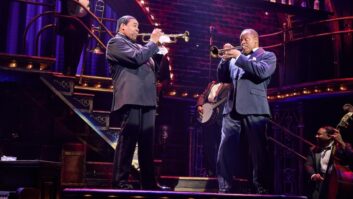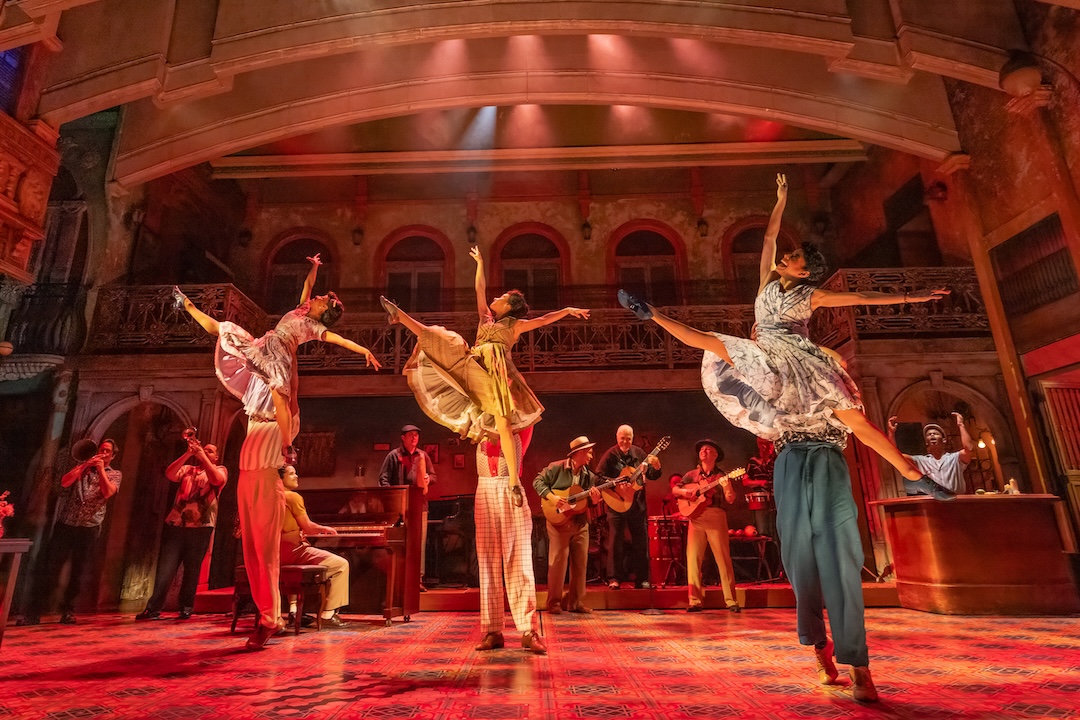
New York, NY (August 12, 2025)—In the 1950s, the Buena Vista Social Club was a late-night joint on the wrong side of Havana, Cuba—a hangout for musicians who loved the infectious rhythms of Son cubano music. These days, however, the venue can be found somewhere else—Broadway—as the long-shuttered club is now the setting of a hit musical with the same name. Since opening in March at the Gerald Schoenfeld Theatre in New York City, Buena Vista Social Club has become a smash, playing to packed houses nightly. Underlining that success, the show took home five Tony Awards in June, including Best Sound Design of a Musical for sound designer Jonathan Deans.
The show was inspired by the 1997 album Buena Vista Social Club, a collection of Son cubano standards recorded by veteran musicians in Havana. While the record became an international phenomenon, selling more than 8 million copies worldwide, the musical sidesteps that success, opting instead to focus on the musicians in 1996, recording at Havana’s EGREM Studios after decades apart, and their younger selves in 1958, facing life-changing decisions inside the namesake club as their country teeters on the brink of revolution.
What makes the show work—and what keeps the audience breaking out in cheers multiple times per song—is the musical rapport between the 10 musicians onstage. Trading motifs and solos as they listen and respond to each other, the band plays real music in real time, and that interplay informed how Deans envisioned the show’s sound design.
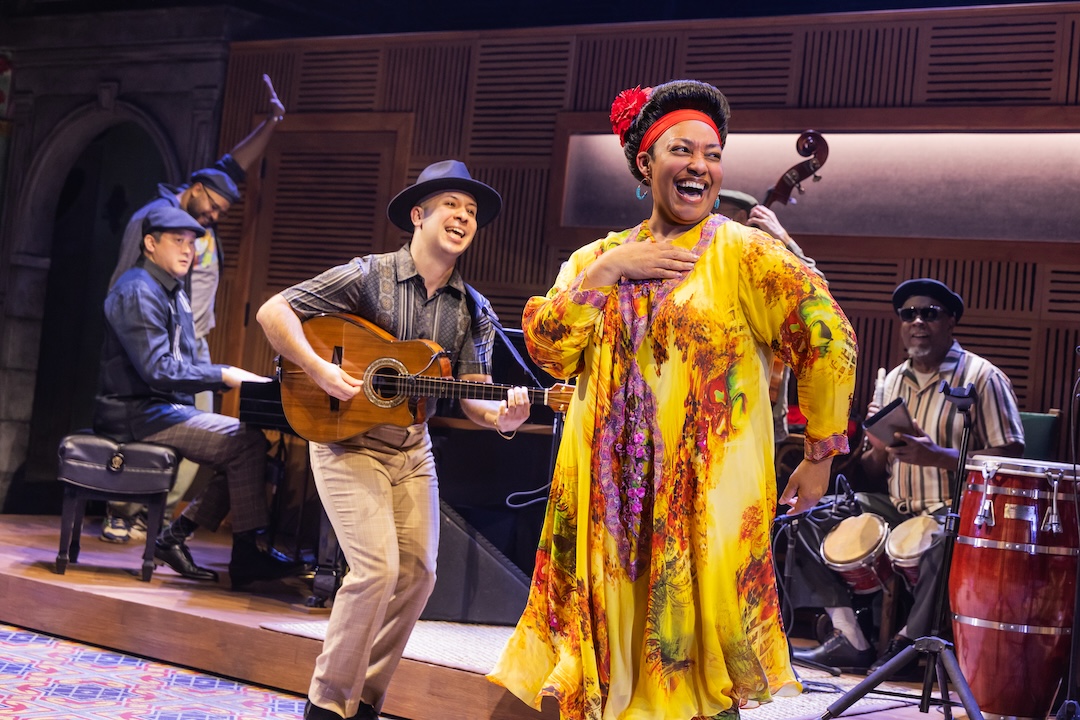
“I spoke to our director and producer and said I didn’t want to do surround,” he said. “That would make it something that didn’t fit the heritage and legacy of this music. I wanted it to be honest and authentic to that style and where the music came from. Buena Vista is about the musicians, the music and those amazing singers we have in the show; it’s not about creating a different space, different ambience or anything else other than ‘what you see is what you get’— and there’s something beautiful about that.”
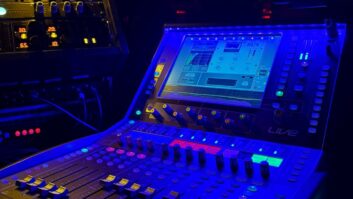
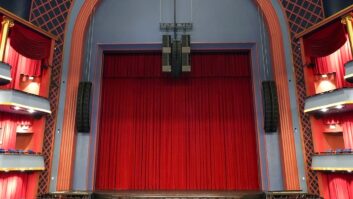
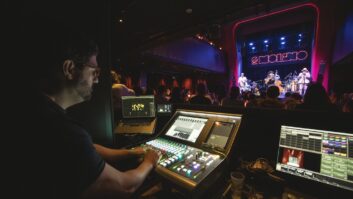
Overseeing a DiGiCo Quantum7T console, FOH mixer/A1 Timothy Jarrell brings the musical interaction onstage to every seat in the house via a Meyer Sound P.A. provided by PRG. The system centers around Ultra-X40 and Ultra-X20 compact point-source loudspeakers, bolstered by Linas used for the balcony left-right and downfill, UP-4slims for front fills, and more.
| Buena Vista Social Club Audio Team |
| Sound Designer: Jonathan Deans
FOH Mixer/A1: Timothy Jarrell Backstage A2: Darren Shaw Head House Electrics/Sound: Sandy Paradise Sound Programming: Daniel Lundberg/Thomas Ford Production Sound: Mike Tracey/Daniel Lundberg Assistant Sound Design: Tate Abdullah |
“In the main orchestra section, you’re listening to two X-40s, left and right, and it is totally glorious—pure sonic heaven,” said Deans. “The detail and the power that you get from a box that size is fantastic. The audience sits back and listens to the left-right like a stereo system—and then all this other stuff happens on stage to make sure the musicians can play exactly the way they want to.”
That “other stuff” is a cutting-edge approach to providing onstage sound in a theatrical setting, essentially giving the cast custom in-ear mixes without actually using in-ear monitors. Because bandmembers are forever moving around the stage and their musical back-and-forth is integral to the show, they all needed customized monitoring but IEMs were out of the question, not only due to cost but also because the musicians often have to interact with other characters, plus IEMs would be anachronistic in both of the show’s time periods.

Like many sound designers, Deans has long been a proponent of tackling onstage monitoring by placing speakers in the show deck facing up at the cast. Engineers can feed every speaker the same signal, and the result is evenly distributed audio for everyone on stage. “Then, if you want, you can start splitting them into groups,” Deans elaborated. “That way, you can send the same thing to all of them or send a sound effect to a specific group as needed, and so on.”
Discover more great stories—get a free Mix SmartBrief subscription!
For Buena Vista Social Club, however, he took that concept even further, making it more granular. If they could send individual feeds to groups of speakers, why not track a musician’s movements and automatically send a custom monitor mix to the nearest speaker onstage?
Now each musician and actor is outfitted with a TiMax TrackerD4 stagetracking tag that sends OSC information to two Meyer Sound Galileo Galaxy network platforms running Spacemap Go. “Spacemap is used for moving sound around a surround system, but I decided to make a map based upon where the speakers were in the stage,” said Deans. Using the tracking data from the TiMax system, the musicians’ custom monitor mixes follow them around, coming out of the 27 d&b audiotechnik e5 stage floor monitors embedded in the show deck. As an unintended bonus, sending a musician a mix that, for example, emphasizes their guitar and vocal, also helps localize those sounds to the performer for the audience hearing the show through the left-right Meyer Sound P.A.
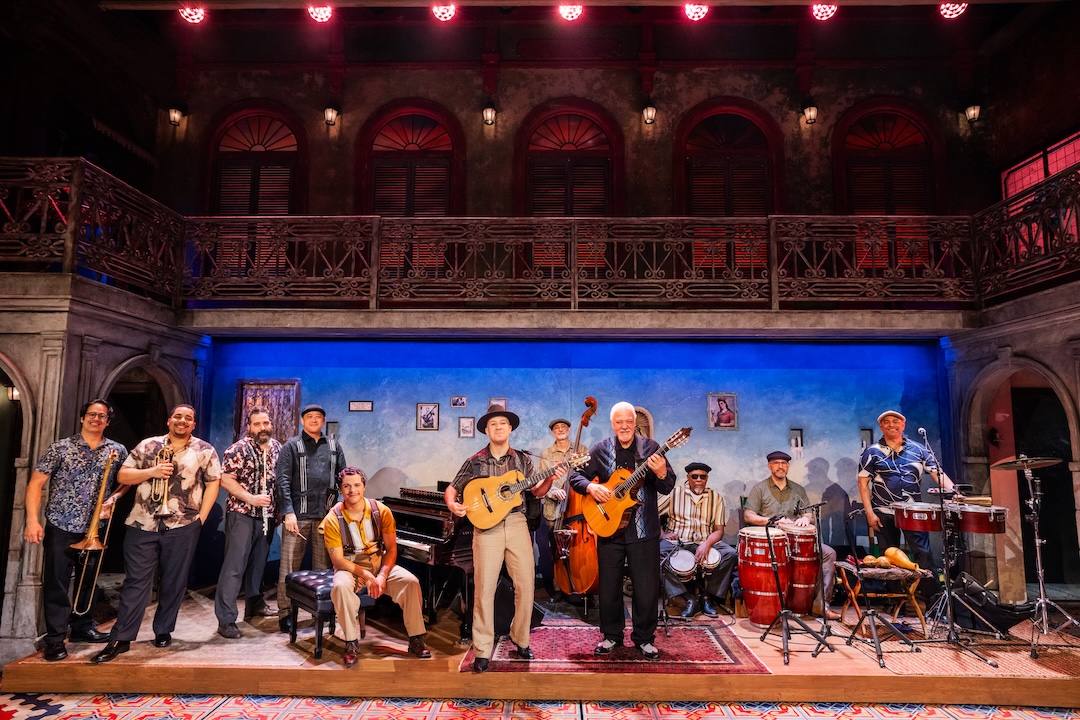
Whether on instruments or vocals, most of the cast is picked up by DPA mics tied to Shure Axient Digital RF systems, but keeping those microphones from feeding back through the floor speakers comes down to old-fashioned preparation during rehearsals. “I go onstage and see what the limitations are,” Deans explained. “That’s part of the system setup, to be able to EQ the information that the stage speakers need and see what the cast is hearing when the rest of the system is on. Then we push it into feedback so we know how far we can go.”
The result of all that technology and preparation is an audio system that allows the performers to focus on their music and nothing else. No two shows are the same, and the performances have evolved throughout the run as the musicians continue to find new musical corners to explore. “We have 10 musicians on stage playing music that is their legacy and their heritage,” said Deans. “It’s live musicians reproducing the work of their culture, and that heart and soul has to be reproduced each time so that you feel the emotion from the cast and the musicians. The emotion that pours off that stage is fantastic!”