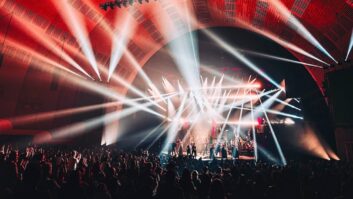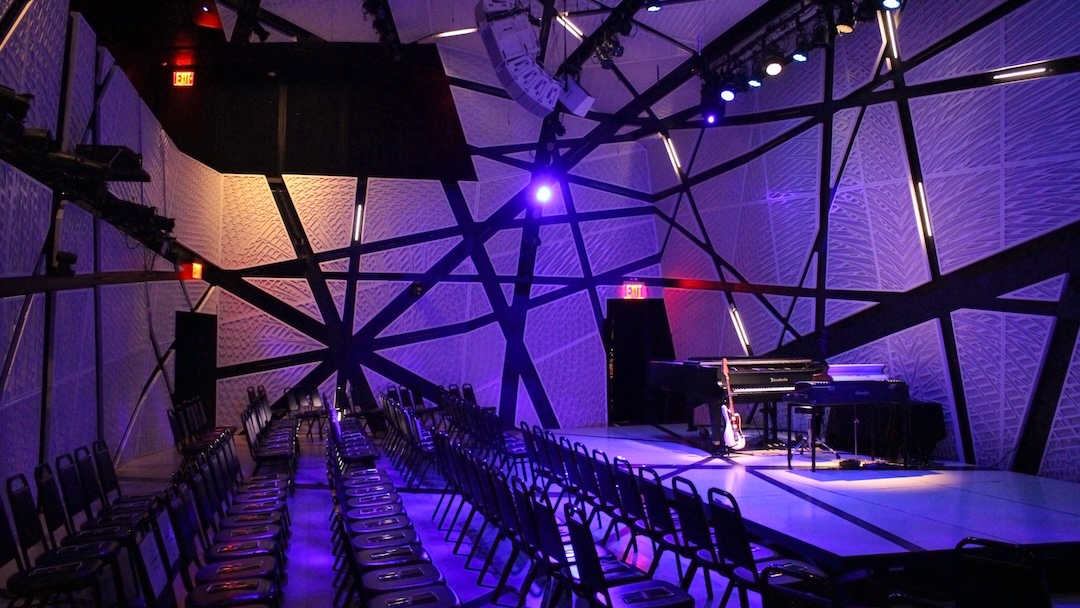
Brooklyn, NY (October 8, 2026)—When Brooklyn’s National Sawdust opened in 2015, it quickly developed a reputation for presenting avant garde, classical and new music; the possibilities it offered artists only increased in 2019 when it upgraded to dynamic spatial audio mixing systems that cover the 300-capacity venue. Now it has updated again, augmenting its Meyer Sound Constellation system further.
“What this upgrade really does is get out of the artist’s way,” says National Sawdust executive vice president, Business & Innovation, Ana De Archuleta. “Composers walk into this room and stop thinking about the technology. They just move sound where they want it and reshape the room around a piece in real time.”
• Discover more great stories—get a free Mix SmartBrief subscription!
As part of the upgrade, the Constellation system has moved from D-Mitri to NADIA processing and added a Galileo Galaxy 816 Network Platform as part of a renewed partnership between the venue and the company.
“When we released NADIA, we said ‘National Sawdust is our benchmark venue for spatial audio integrated with active acoustics,’” says Meyer Sound’s director, Spatial Sound, Steve Ellison. “They need to be on our benchmark platform.”
• Lee ‘Scratch’ Perry Immersive Work Debuts at National Sawdust
Operating on a Milan AVB network, NADIA dedicates one processing path to Constellation active acoustics and a separate one to amplified audio. At National Sawdust, Spacemap Go now controls spatial mixing on that second path, replacing an early version of the tool the venue had used since 2019.
National Sawdust Director of Sound and Technical Design, Garth MacAleavey has tied both paths into his show control. “I need to create program changes in QLab to tell three different systems what to do, so that when I can’t be at rehearsal, my sound is set,” he says. “My associates can cue through the show, and the mixes will change, Constellation will change, and Spacemap Mix and Channel Snapshots will change.”
• Watt’s Up: Andrew Watt on Producing Legends – Part 1
Constellation has shaped the room since 2019. The original installation ran a single processor devoted to reverberation; the new NADIA system provides three. “We were able to add early reflections, which enhance both the experience for musicians on stage and the audience’s spatial impression of the performance,” says Meyer Sound senior acoustic engineer Jessica Borowski.
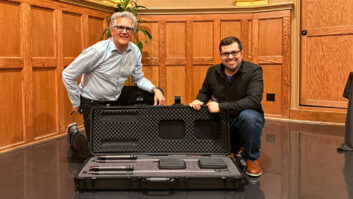
During the upgrade, MacAleavey joined the team on the final day for an hour of focused listening, drawing on seven years of running the system. “We were able to say, ‘Here’s where we’d like these starting points to be,’” he says. “Now it’s like a custom menu of exactly what our engineers and sound designers are looking for when they grab for a reverb or a tighter early reflection sound.”