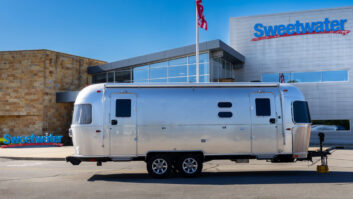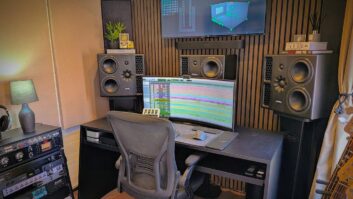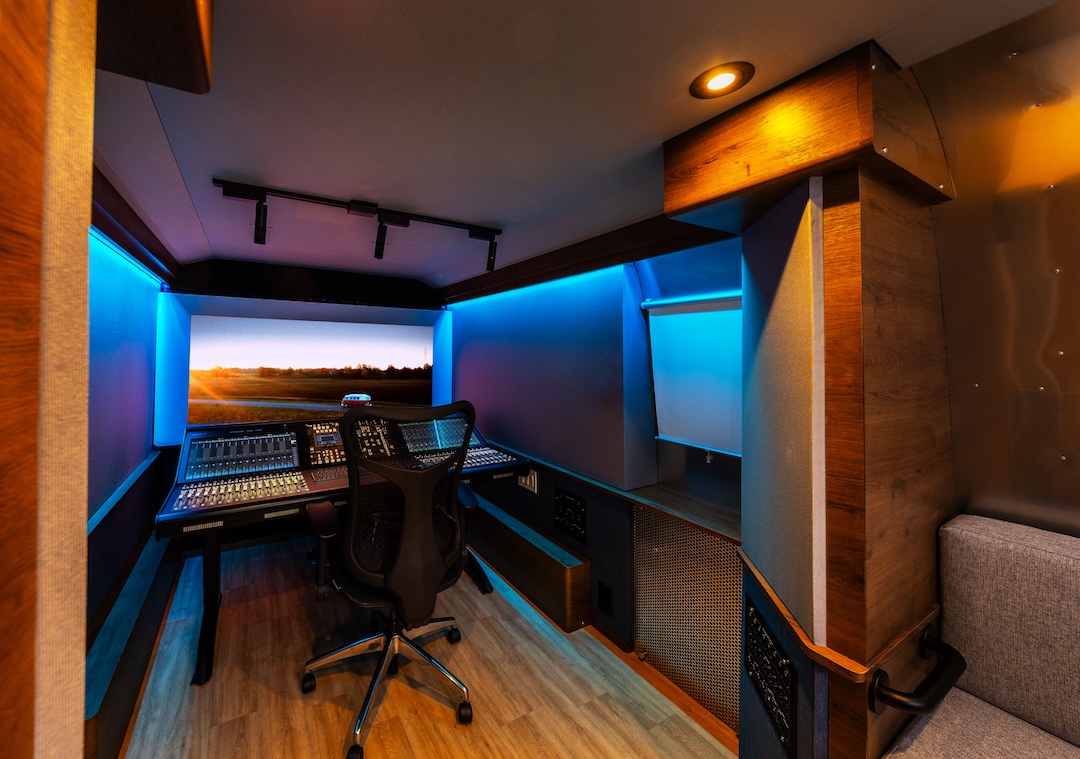
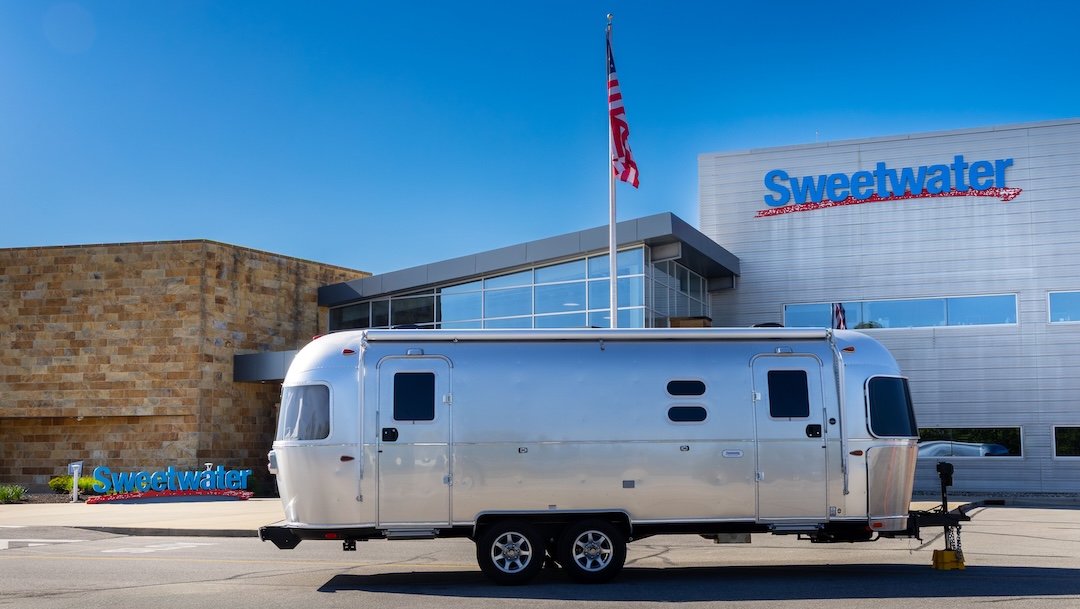
Fort Wayne, IN (October 14, 2026)—Back in mid-May, Sweetwater held a relatively quiet press event on its Fort Wayne, Indiana, campus to unveil the new Sweetwater Airstream, dubbed, “the first-ever fully immersive Dolby Atmos mobile recording studio,” with acoustic design by Russ Berger Design Group. It would be traveling the country over the summer, they said, stopping in at festivals, regional events, trade shows, houses of worship, universities and, then, eventually land at AES Nashville at the end of October.
It was a good story: bringing a studio-quality immersive music experience directly to those who hadn’t yet been exposed. Along the way, they would provide immersive education opportunities and take part in real-world productions. It wasn’t a new concept, not even for Sweetwater, though Atmos provided a nice modern update. Of course, people had been building studios inside vehicles for decades, including inside Airstreams. It wasn’t being pitched as a “retail product,” and from a news perspective, that seemed like the end of the story.
As it turns out, the unveiling was just the beginning —and there’s an even better backstory.
A MAN IN A VAN
Chuck Surack founded Sweetwater in 1979 as a 4-track mobile recording studio in a 1960s-era Volkswagen Microbus. He would record friend’s bands in and around Fort Wayne; he would set up at churches and schools. When he made money, he would buy more equipment.
Fast-forward to mid-2025. With an eye on Sweetwater’s upcoming 50th anniversary, a few employees started talking about ways to pay tribute to Surack and the early days of the company. A restored VW Microbus seemed an obvious choice, but rather than outfitting it with gear from the late-’70s, they wanted a thoroughly modern record/mix production setup. Then they called Russ Berger Design Group.
“Steve Dwyer and Phil Rich from Sweetwater called us, and the conversation started with, ‘What if we did the van again?’” recalls Mark Hornsby, president of RBDG, who previously spent eight years at Sweetwater and headed up the team that built the company’s in-house studios, also designed by RBDG. “I said, ‘Guys, you could do the van, but you’re not going to mix anything in it. It’s too small, and it’s loud and it’s noisy—but if you want to do a mobile studio in an Airstream, I know those guys and they happen to be right down the road from you. They’re always looking to do cool, new things and they like technology.”
• Discover more great stories—get a free Mix SmartBrief subscription!
The idea struck a chord; more phone calls and meetings followed. Mike Picotte, Sweetwater VP of Sales, Commercial, was in the inner circle from the beginning. He says, “I remember at one of those early meetings when we were all brainstorming, I leaned over to Russ and said, ‘So, do you think you can do Atmos in an Airstream?’ And Russ being Russ, he just smiled and said, ‘Well, we’ll find out.”
FROM SHELL TO SHOWPIECE
Airstream was founded by Wally Byam in 1931 in Jackson Center, Ohio, and still manufactures on site. Each 25-foot, aluminum travel trailer requires about 350 hours to build and includes roughly 3,000 rivets. RBDG’s custom design called for several modifications, including moving the doors and windows; creating a machine room in the rear, as well as a rear hatch to make it easier to move gear in and out; and removing the sleeping area, bathroom and kitchen.
• Watt’s Up: Andrew Watt on Producing Legends – Part 1
“A lot of testing was done early on in Ohio, basically shooting out the shell, figuring out what resonates and what’s doing what in there acoustically,” Picotte says. “We were making changes. The air conditioning ducts coming in became a cavity, so we removed that and got more height out of the ceiling speakers. We figured out how we were going to build the PMCs into the walls and then just made some fine adjustments. All those tests helped give Russ feedback on what to change—but I have to admit, RBDG’s design going into it was pretty spot-on.”