
SAYING NO TO ‘YES’
While he may work with music legends, Andrew Watt has no interest in being their Yes Man. He’s all too aware that the artists he’s been working with are perfectly capable of producing themselves—and usually do—so what he has to bring to the table, even more than his songwriting, is his opinion, popular or not. It’s no accident that Grammy-winning producer/engineer Cirkut told The Washington Post that Watt was “not afraid of being the bad guy,” but it’s an assessment the man himself is quick to dismiss.

“I don’t know if it’s good guy or bad guy; it’s just I take my role as a producer for these people so seriously,” says Watt. “It’s like you’re showing up to work today with the people that made you who you are, and your job is to tell them what you think! If you don’t do that, you’re not doing your job.”
Of course, a little nuance and self-awareness can go a long way, he adds: “I try and do it in the most delicate way I can, because there are no rules with art. There is no right, there is no wrong. It’s opinion-based and it’s taste-based, right? I just do it in a way where it’s not presented as ‘If you don’t do this, you’re not making the right choice.’ That’s not a real thing; it’s only what you think and how you feel.”
But just as voicing a difficult opinion takes strength, so does living with the consequences.
“You have to be willing to throw your idea out there and be willing to move on from either result,” he admits. “If it’s great, you’re still not some be-all, end-all person, and if it’s terrible, you have to be able to say, ‘Whoa, I gave the worst idea ever! I gotta let that go and not think about that anymore.’ Otherwise, that can derail you, for sure.”
ROLLING WITH THE STONES
Fortunately, good ideas tend to stick and The Rolling Stones’ Foreign Tongues closes out with one of Watt’s better ones: Capturing Mick Jagger and Keith Richards’ cover of Chuck Berry’s “Beautiful Delilah” old-school style—just two legends, one microphone and a reel of analog tape.
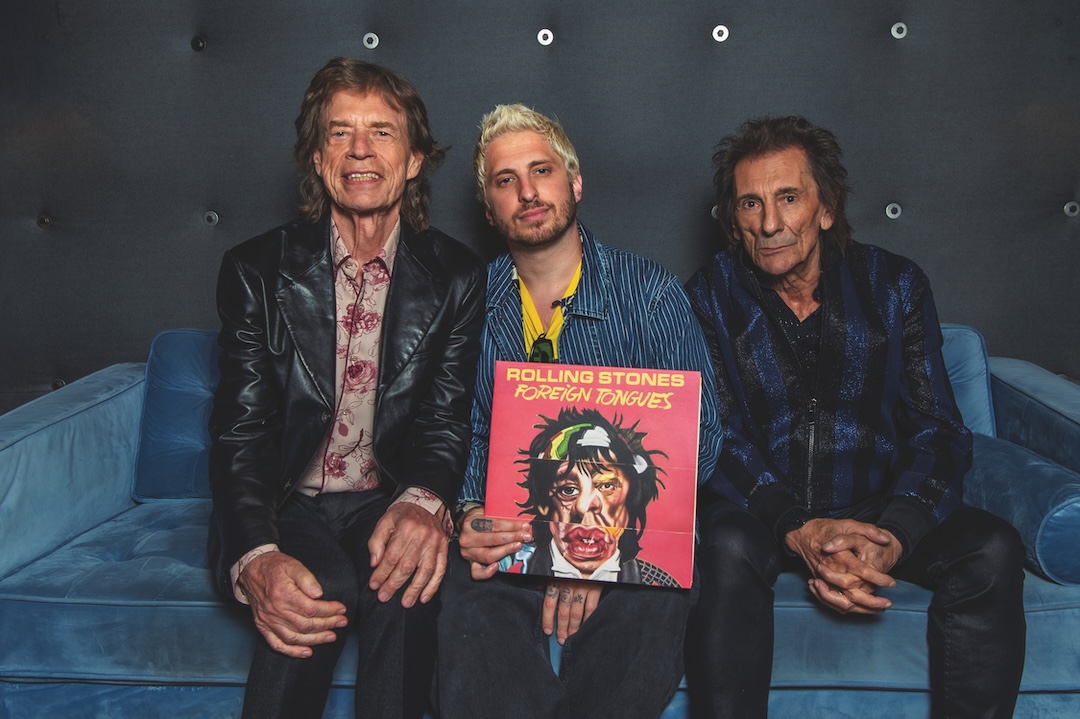
“The relationship between Mick and Keith is fabled—it’s one of the all-time greatest musical collaborations ever,” says Watt. “Wanting to capture that and allow it to be heard on record [meant] putting one ribbon microphone between them and recording them to tape, where it’s not something that can be touched…. Hearing the way that they’re reacting to each other in real time is as raw as it can be, and that’s what their performances reflected.”
No doubt Watt was hovering just a few feet away, listening intently on headphones, much as he does for every artist he works with. As a producer, he’s adamant about being in the room with musicians when they record so that he goes on their emotional journey with them, regardless of whether they’re belting heartbroken vocals or simply pounding the toms into oblivion. He’ll definitely be in the room when he records one particular artist soon: himself.
• Discover more great stories—get a free Mix SmartBrief subscription!
“I’ve started performing and doing more shows,” he says, “and I have a couple ideas for a cool project that I’m going to start working on at the top of the year. Until I’m in it, I don’t know if it’s something that’s going to take me a month or a year. We’ll see.”

Watt stepping into the spotlight could be an interesting proposition, giving him the chance to apply everything he’s picked up from a decade of being in the room, co-writing the hits, reworking the riffs, learning the tricks of the trade from the masters and more. Ultimately, it would bring him back to where he started—coming up with a hook and figuring out how to best support an artist, regardless of whether it’s a music legend or himself.
“I started writing songs—that’s a place I’m really comfortable in—and then producing came after,” he says, “but I think it [producing] is just whatever is required of you in the project as you’re doing it. I can do a project where I’m writing every song on the album; I can do a project where I wrote zero songs. It’s just whatever is required and however it naturally progresses when you’re working. You do what is needed of you.”