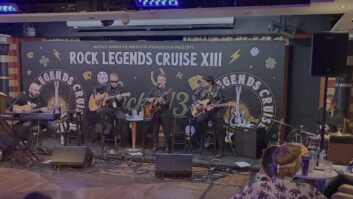
Gateshead, UK (October 9, 2026)—I mixed Jon Anderson & The Band Geeks at The Glasshouse earlier this week, and it was an interesting experience.
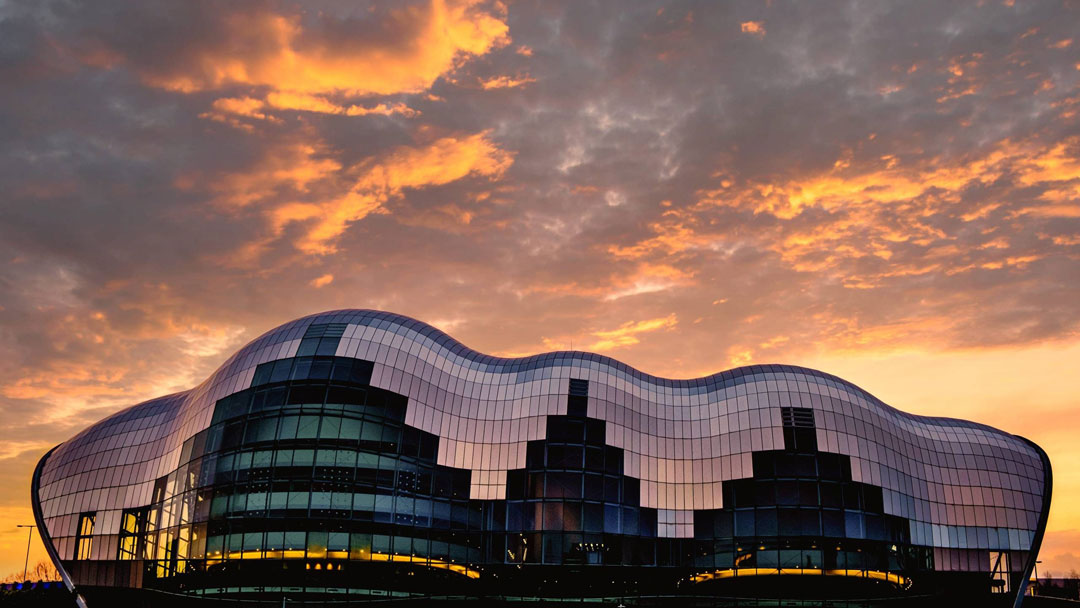
Formerly known as the Sage Gateshead, The Glasshouse International Centre for Music (or “The Glasshouse” for short) opened in 2004 and contains three venues under one roof: Sage One (a 1,700-cap concert hall), Sage Two (450-cap theater) and the Northern Rock Foundation Hall, a small rehearsal and performance hall. Although the spaces are housed under the same roof, along with six bars, a cafe and a brasserie, the venues are completely separated structurally, designed for optimal acoustics as well as a high degree of isolation from one another.
Sage One is home to the Royal Northern Sinfonia, but the venue has hosted artists as diverse as Herbie Hancock, The Blow Monkeys, Shawn Colvin, Steve Hackett, Ben Folds, London Symphonic Rock Orchestra, Pet Shop Boys, and Jon Anderson & The Band Geeks (shameless plug!).
• Discover more great stories—get a free Mix SmartBrief subscription!
The designers of The Glasshouse (Foster + Partners and Arup) have succeeded in their efforts to maximize isolation: Close the doors between the stage and the backstage dressing room areas and you’d never know that a rock band was raging onstage. As I walked from the lobby to the backstage dressing room areas at Sage One, I took a wrong turn, opened a door and heard a chamber group rehearsing classical repertoire. Close that door and you’d never know there were live musicians on the other side.
The interior of Sage One features ceiling panels that can be raised or lowered to adjust the volume of the room, and curtains that can be drawn across the wood side walls, enabling the room acoustics to be tailored for the performance.
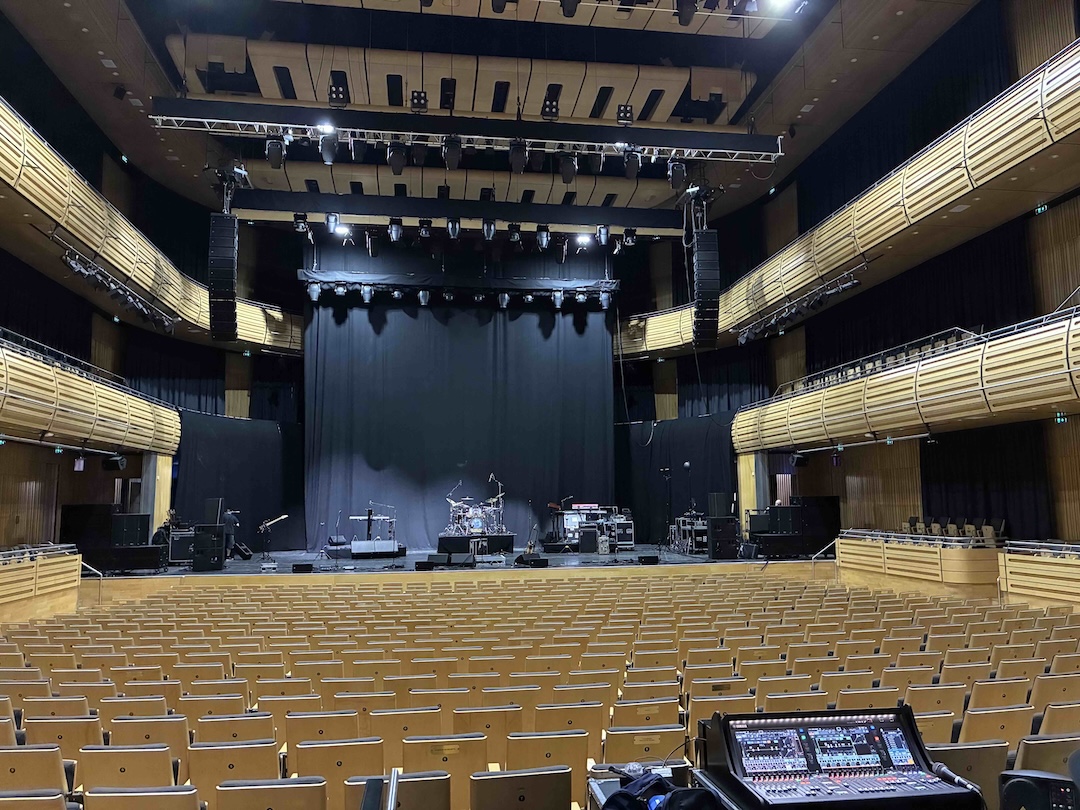
House P.A. is RCF, consisting of flown arrays of RCF HDL30-A (12 per side) covering the majority of the orchestra rows (or “stalls,” as the Brits refer to them), as well as Levels 2 and 3. RCF HDL30-A (three per side, more on these in a minute) and one RCF 9004-AS sub (one per side) cover the front rows, augmented by four RCF HDL26-A for front-fill, and RCF TT10-A for out-fills and balcony fills. Low end is reproduced by RCF 9006-AS subs (three per side). The main P.A. system is tuned and time-aligned using RCF RDNet.
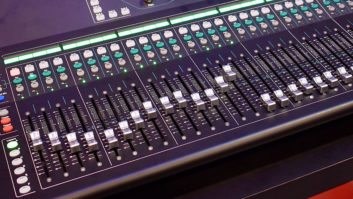
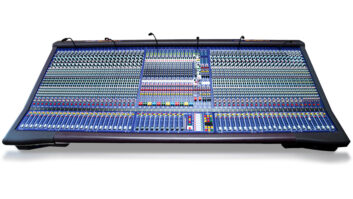
Monitors are d&b M4 and QSub, powered by d&b D20 amplifiers. House audio consoles include DiGiCo SD5cs at FOH and DiGiCo SD12 at monitors (upon availability), with SD racks running at 192 kHz.
• Audio Gear Lined Up for Mystery Immersive Venue
The room is fairly dead (especially when full), but not completely so. I’d estimate the reverb time at around three-quarters of a second with a full house. Compared to soundcheck, I had to push the P.A. quite a bit at showtime to fill the room, especially the drums because there wasn’t a lot of drum spill from the stage. The house system blends seamlessly with sound originating on stage, almost giving the illusion that there’s no P.A.
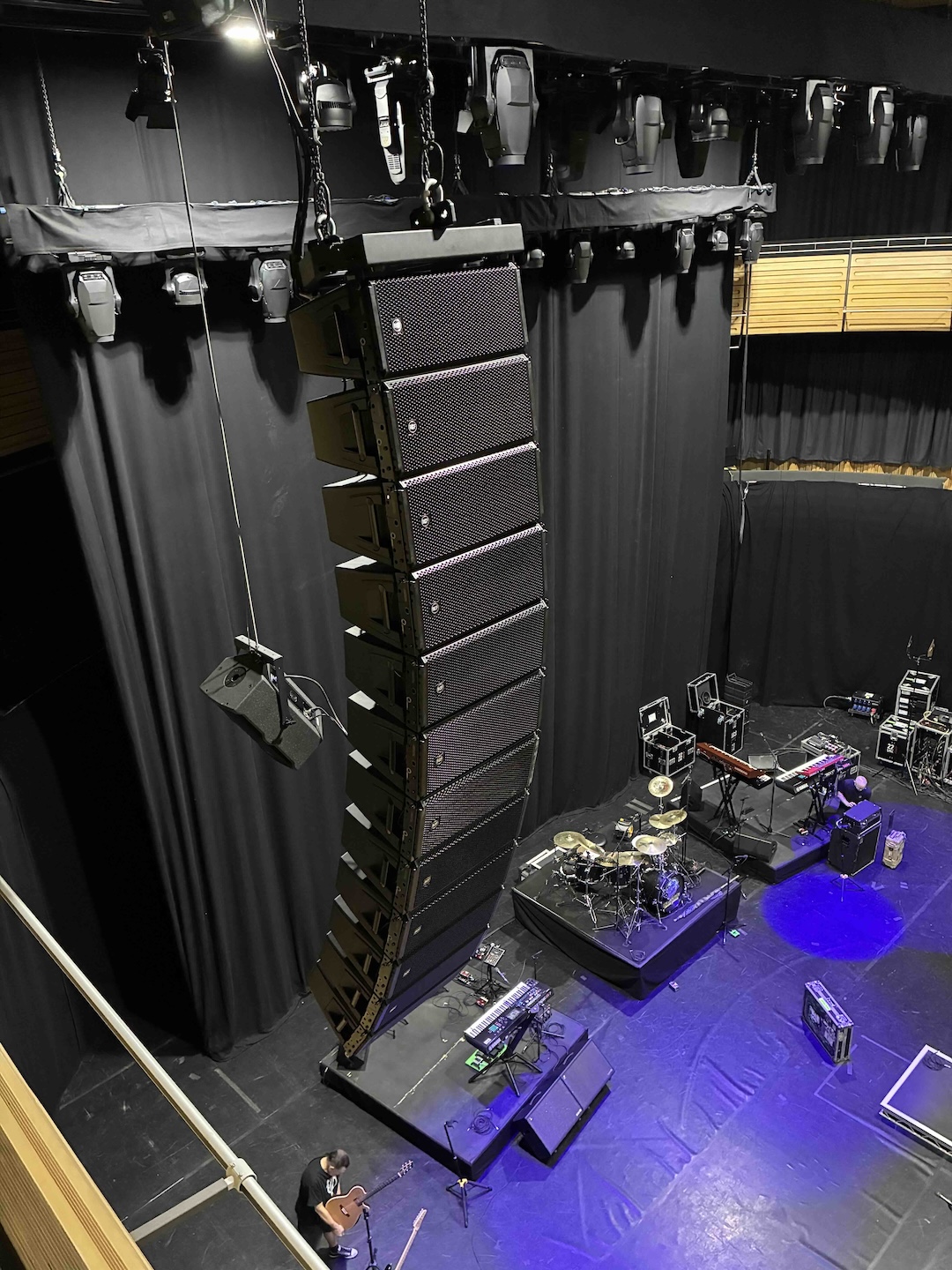
Vocal intelligibility is very good, and effects are easy to hear, so be careful not to use them with a heavy hand because they won’t be covered up by sound bouncing around the room and smearing detail. I also felt like I could create depth in the presentation whereby you got a clear impression that keyboard players Christopher Clark and keyboard player/guitarist Phil Castellano were upstage (they are).
• Mix Live Blog: Update That Firmware!!
At one point, I noticed something interesting regarding the front fills: During soundcheck, the three RCF HDL30-A per side called attention to themselves, and my instinct was to back them off a few dB. However, my intrepid systems tech Nick Jackson from 22live (Redditch, UK), who has experience in the room, suggested I not do so. And, in fact, when the room filled with people, those RCF cabs made the vocals easy to hear for the front rows without calling attention to themselves. As Nick put it rather eloquently, “You have a canvas to work on.”