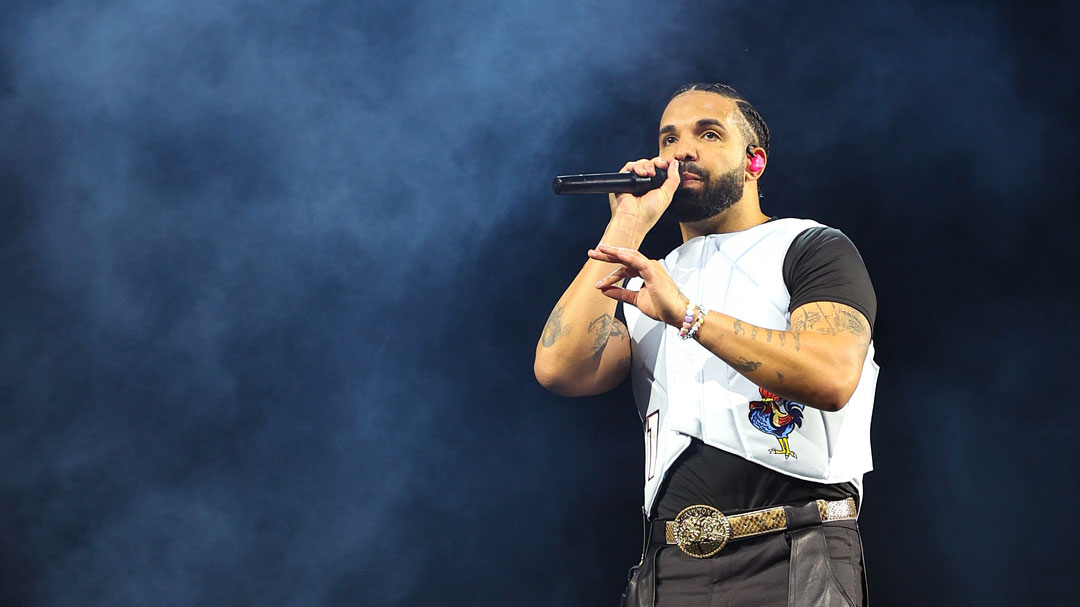
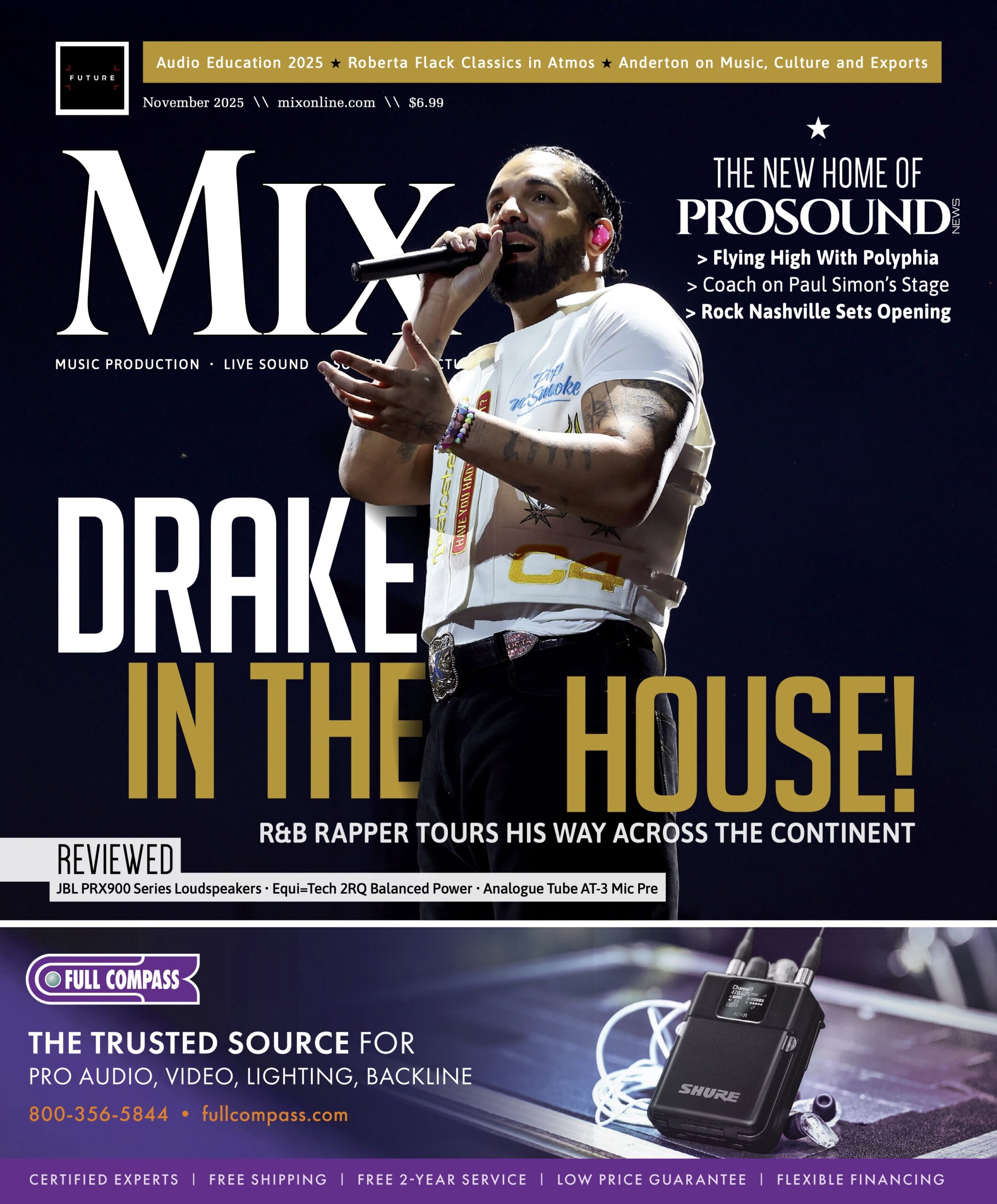
Munich, Germany (November 4, 2025)—Many people go abroad in the summer, but while Drake spent the warmer months overseas, the superstar wasn’t on vacation. Crossing the Continent with his $ome $pecial $hows 4 U Tour, co-billed with PartyNextDoor, he brought his trademark mix of rap, R&B and dance music to European arenas, driving fans into a frenzy at each stop. Along for the ride was Demetrius Moore, Drake’s FOH engineer since 2010, overseeing a massive audio system used to make every seat at the in-the-round concerts seem like it was in the front row.
“The beginning of the show is mostly his R&B records, so it starts with more of an intimate mix, like you’re in a theater, and the crowd sings along,” said Moore, speaking inside the Olympiahalle in Munich, Germany. “Then after five songs, it’s the first rap song and it hits you in the chest! The dynamics change to a more bass-heavy rap show that moves the crowd, and it takes off from there. Then when he performs up in the 200 level, doing dance-type music, it’s like being in Ibiza. I cater my mix to whatever the music is, so it’s a very dynamic show.”
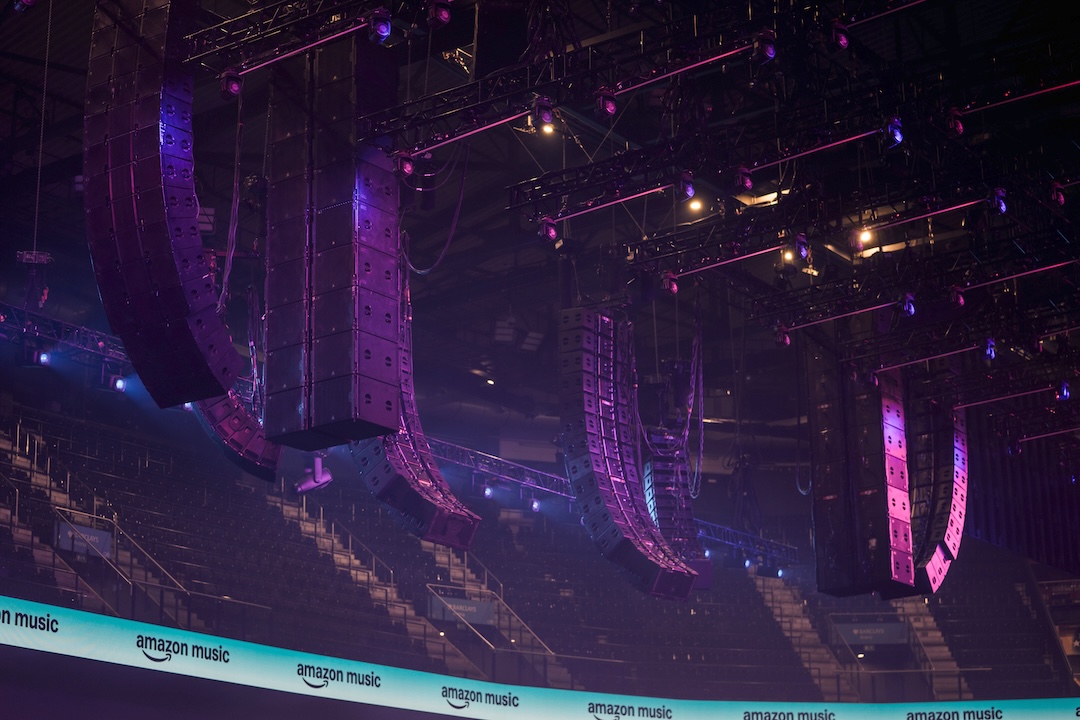
Drake covered every inch of the stage—a giant oval comprising Plexiglas runways that followed the dasher, connecting to larger decks at each end of the floor. While the staging gave every fan a chance to see him up-close, it also meant Drake performed all night in front of the tour’s Adamson Systems Engineering P.A. provided by Eighth Day Sound, a Clair Global company.

Following the outline of the oval, the P.A. was broken up into four corners of hangs, all faced outwards toward the stands. Each corner featured a main hang (15 E15 cabinets with three E12s at the bottom) facing an end of the arena; a side hang (18 S10 two-way cabinets) facing a side of the arena; 18 flown subs; and eight powered CS10 downfills that covered fans on the floor, standing inside the oval stage.
“They feel the impact, that’s for sure,” said Moore, “but a lot of people look at the P.A. and say, ‘Oh my God, this is gonna rip our faces off!’ No, it won’t. We did it this way for even coverage, even dispersion and to have power without killing people. I feel like one of the things tours do is hang less boxes, but I have the privilege of being with an artist where sound is important, so if I say we need this many boxes to cover this area and it’s going to cost this much—cost doesn’t outweigh clarity and power. We don’t waste money, but we do not cheap out; we give people quality when it comes to audio.”
Case in point: The tour carried a pair of DiGiCo Quantum852 consoles for Moore and monitor engineer Chris Lee, with both desks on an Optocore network that also supported three SD-Racks and one SD-MiNi Rack.
“My desk, I use it as an instrument,” said Moore, noting how he used a variety of plug-ins and multiple snapshots per song to get the sounds he needed. “It’s definitely an effect-heavy show. The first song is ‘Marvin’s Room,’ and if you listen to the album, there’s a reverse gate reverb delay that is the whole vocal sound of that song—which we have to recreate live! It’s three effects: The vocal goes into the reverse gate, which goes into the reverb and that goes into the delay. I sat there for I don’t know how long, tweaking it until it was as close to the record as possible. It was a little bit of a challenge trying to get it exact, but we’re damn close. Not every song has crazy effects like that, but there are a lot throughout the show.”
No matter how crucial specific sounds were, however, the key to every song was still Drake’s voice. “I always start with the vocal,” said Moore. “To quote Prince, ‘If the first words out of an artist’s mouth when they hit the stage aren’t heard, you’re a horrible engineer.’ They came to hear the artist, and what are you going to do—wait ’til the third song to get it together?”
Bryan Adams Records Acoustic Show at Pompeii
Ensuring those first words were heard loud and clear, Drake’s vocals were captured with a Sound Devices Astral HH wireless handheld mic, topped with a Sennheiser 9235 capsule. The artist also heard himself wirelessly, via JH Audio in-ear monitors connected to a Wisycom pack.
Those monitors were necessary, too, as audiences were there to let loose. “I definitely don’t try and mix over the crowd,” said Moore with a chuckle. “I let them get it out of their system. I treat them as another instrument, as an equal part of the mix. If you heard a song without the crowd, you might be like, ‘Man, that part is a little loud,’ but come to the show and it actually sits in pocket with what the crowd is doing. Third song of the show, the cheering is so hot that I have to make sure that this sample—the most recognized part of the start of the song—is heard. They’re cheering, but once they hear it, they segue, going from yelling to singing the melody of that sample.”
Discover more great stories—get a free Mix SmartBrief subscription!
Speaking just days away from the Drake tour’s finale in Hamburg, Moore allowed that he’d mixed in some challenging venues over the previous two-and-a-half months, but even with the end of the road in sight, he was focused solely on that night’s gig in Munich. The final show would come soon enough. “There is no thinking about Hamburg,” he said. “You got to mix every show like it’s the first one—so I’m thinking about tonight’s show until the last note of the evening.”