London, England (October 29, 2026)―Production sound mixer Nadine Richardson used a variety of technology to capture dialogue, atmospheric environments and explosive action sequences for historical drama Pressure.
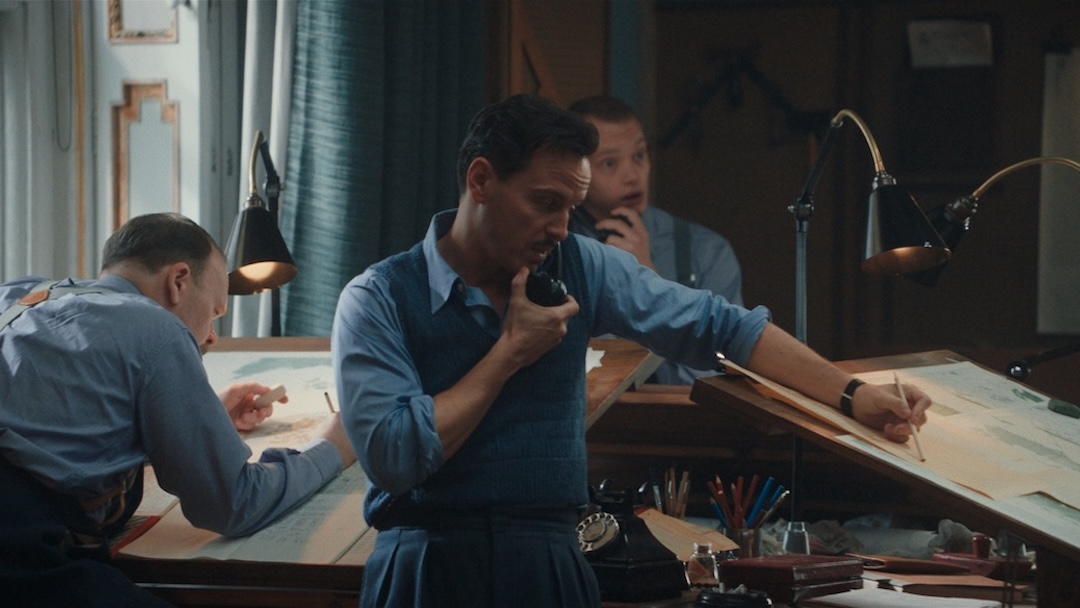
Set in the 72 hours leading up to D‑Day, Pressure is a historical drama starring Brendan Fraser as Supreme Allied Commander Dwight Eisenhower and Andrew Scott as British meteorologist James Stagg, whose conflicting weather predictions shape one of the most consequential decisions of World War II. From bustling operations rooms to chaotic beach landings, miking played a central role in meeting the demands of the film’s dynamic environments.
To start, Richardson selected DPA 6060 and 6061 subminiature lavaliers, which provided the discreet size and sound quality necessary for the production. “The 6000 Series microphones are very good at hiding in very small places, without any visibility; they’re perfect for that,” she says. For scenes involving shouting or explosive action, Richardson also incorporated 4061 loud and 4062 extreme SPL omnidirectional miniature microphones, which “offered additional headroom and clean handling of high‑SPL moments.”
• Discover more great stories—get a free Mix SmartBrief subscription!
For interior scenes in the forecast and operations rooms, and other booming applications, Richardson turned to DPA 4017 shotgun microphones. “The DPA shotguns sound lovely and mix incredibly well with the radio mics,” she adds. “The mics also provided the clarity and consistency needed to capture the film’s dense meteorological discussions and the energetic hubbub of the operations room.”
Richardson also relied heavily on 4018 supercardioid microphones with active cables in plant miking setups, for the compact size, durability and diffused, mix‑friendly sound. Hidden within telephones and around maps and military equipment, the 4018s helped capture authentic environmental detail throughout the production. “We planted the mics into vehicles, and they dealt with vibrations and humidity incredibly well,” she says. “The 4018s are very durable; you can place them wherever you need to, and they work great.”
• David Bowie Concert Film to Tour Arenas with Full Production
To support the DPA microphones, Richardson used Wisycom MTP61 miniature bodypack transmitters across the cast, MTP40 Bodypack and MTB40s plug-on transmitters for plant mics and MTP60 miniature transmitters on booms, along with an MRK16 modular wireless microphone receiver system with LFA wideband active antennas for multizone coverage.