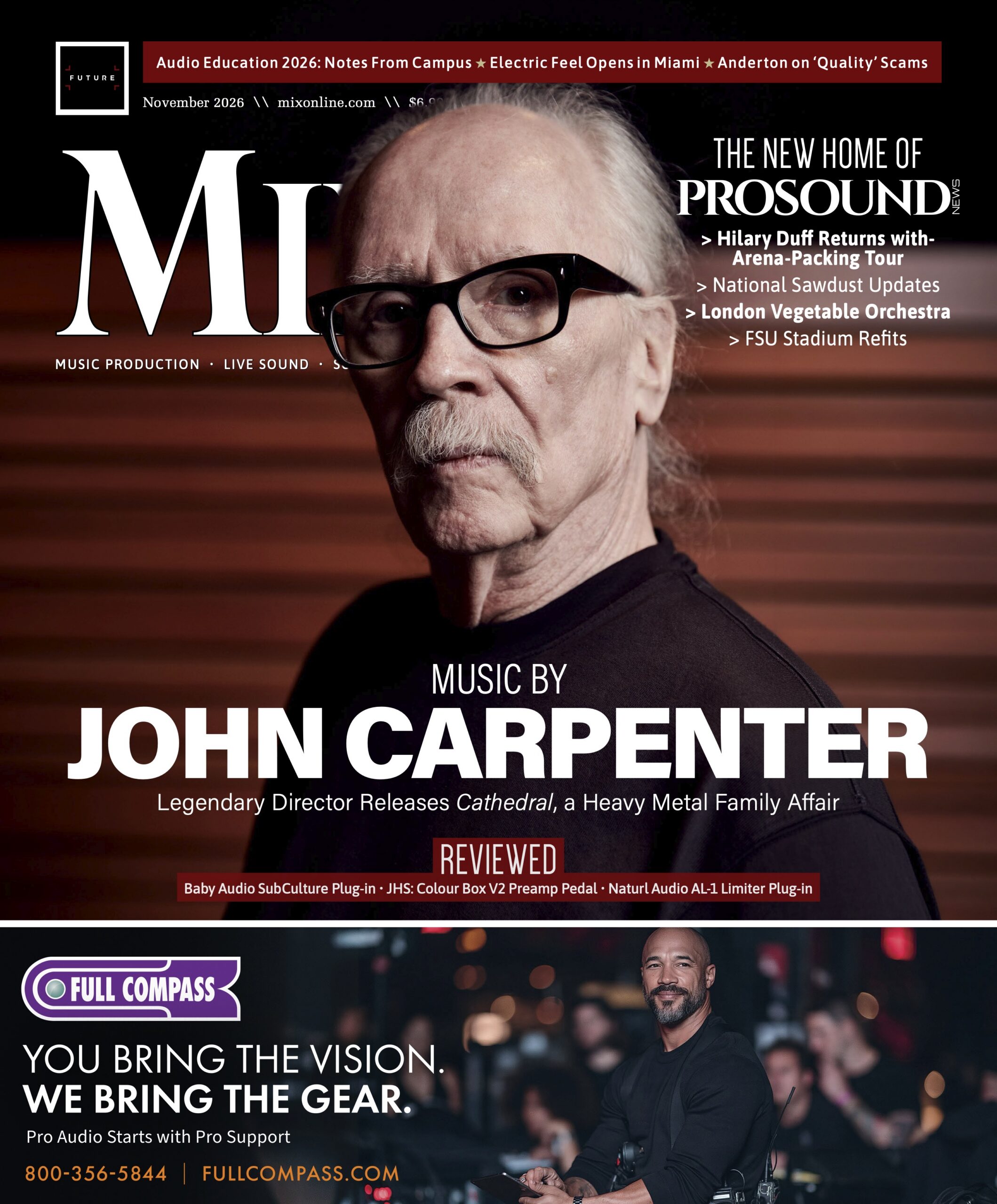
I’m sure that more than a few readers looked at this month’s cover and cover story, and thought to themselves, “John Carpenter? On the cover of Mix? Wasn’t he a director?” For those born after 1990, it’s a fair question, I suppose. His masterworks—and his most commercially successful films—were made primarily from the mid-1970s to the late-1980s. And while he’s credited as executive producer, creative consultant and co-composer on Rob Zombie’s 2018 re-take of Halloween, he last directed a film in 2010.
But to those who came of age in the ’70s and ’80s, Carpenter represented something all-new, bringing a fresh vision and a unique voice to his filmmaking. Assault on Precinct 13, The Fog, The Thing, Escape From New York, Christine, Starman and, later, Village of the Damned and Vampires. He is the Godfather of the Cult Classic, ferchrissakes! In October 1978, with the release of Halloween, he practically reinvented and redirected the horror genre, setting the tone and style for the flood of franchises that followed.
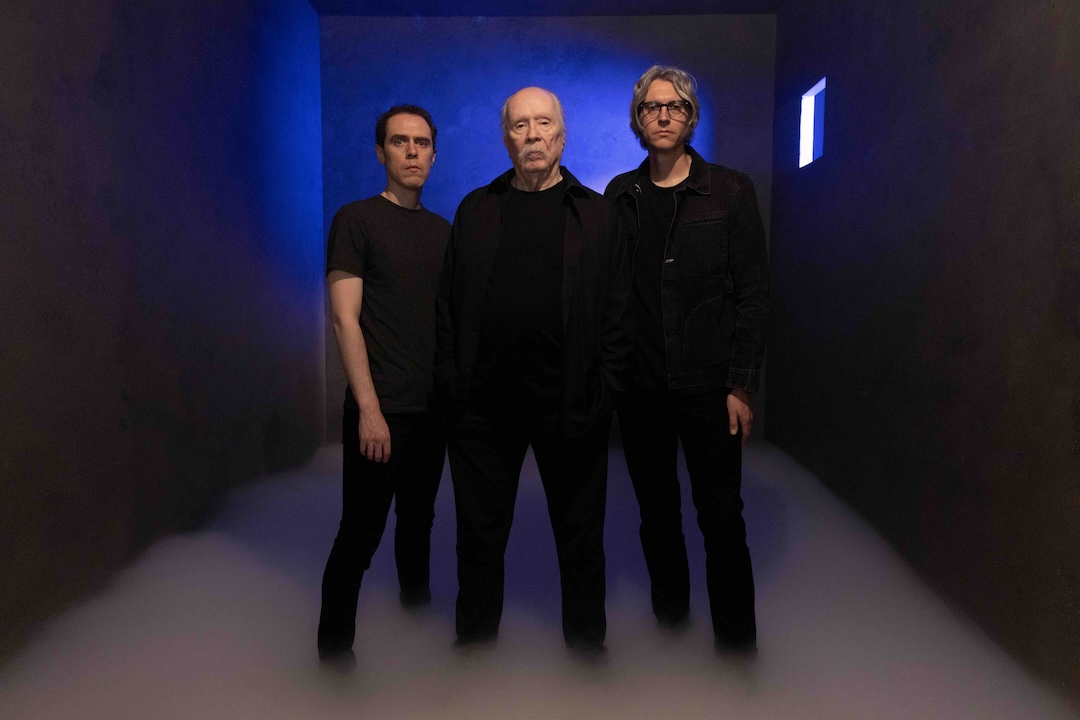
Still, he’s not on the cover because of his movies; he’s on the cover because of his music. Ever since he started making homemade horror movies on 8mm as a teenager, on to the student shorts at USC Film School and throughout his professional career, Carpenter has written, and sometimes performed, the music for nearly all of his films. Then, once he left the director’s chair, he turned to music as his main means of creative expression, releasing 10 albums since 2015, including his latest, Cathedral, this past August.
He was also one of the early users of synthesizers in film music, going back to Dark Star, which he directed in 1974; his influence has been recognized by countless composers and electronic artists over the years. It’s not that he ever thought about being a pioneer, he has said; he just never had the budgets. Today, he still plays his primary hardware synths; he also records and edits in Logic and has embraced Spectrasonics Omnisphere.
• Subscribe to Mix Magazine and our Weekday Newsletter for free!
Did I mention that Carpenter also writes his own scripts?
Think about that for a minute: Write. Direct. Compose. Those are three very different talents, each requiring its own set of skills and its own creative focus. To do all three? And to do them all so well? That’s a remarkable brain.
I have long been fascinated by the workings of the human brain, especially by the way creative brains receive and process information. One of the common threads I’ve found among artists and musicians I’ve either talked to or read about over the years, is that they are often at their best when they face some kind of constraints, whether self-imposed or due to external factors. Limits breed creativity.
Irwin Yablans, executive producer on Halloween, described some of those limits in an episode of the Netflix documentary series The Movies That Made Us. Carpenter, he said, was offered a script originally called The Babysitter Murders, and was hired to direct on the condition that he make the movie for $300,000, no more. Also, no gore. No heads being cut off.
No bellies being ripped open. No knives were to be seen actually ripping into flesh, like in Psycho. And as little blood as possible. It was meant to be, Yablans explained, a “theater of the mind.”
• Mix Blog: To Brian Ahern: My Mentor, My Friend
Carpenter’s salary was $10,000, which included writing a new script, directing and writing all the music. When the shoot was over and the money had run out, Yablans said, Carpenter wrote and recorded the score—including one of the most memorable themes in horror history—in less than a week in order for the film to be able to make its planned Oct. 31 premiere.
To this day, it remains the scariest two hours I’ve ever spent in a movie theater. It’s where I first truly experienced the power of music in triggering emotion. I was 16.
And now, since we’re talking about John Carpenter’s music, I’ll end with a coda. On the last Saturday in September, just over a month ago, I moderated the opening Keynote Conversation at the 13th annual Mix Presents Sound for Film & Television event at Sony Pictures Studios. The talk was titled “Fear, Tension and the Psychology of Sound,” and my guests were two-time Oscar-winning supervising sound editor Karen Baker Landers and Tyler Bates, one of the most talented, versatile and inventive composers working today.
At one point, I asked Bates, who wrote the music for the 2018 Rob Zombie-directed Halloween, how he approached updating the classic “Halloween Theme.” He gave a quiet laugh, put his hands in the air, and said, “You know, there are lots of little things I could do. I can add a bit to the low end, I might make it a little more bright or cleaned up, more modern-sounding. I can make it feel a little bigger and more filled out… but I’ll never be able to make it ‘better.’”
—Tom Kenny Co-Editor