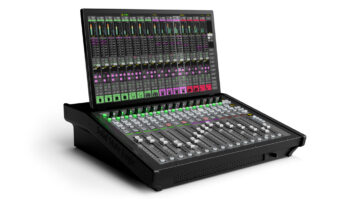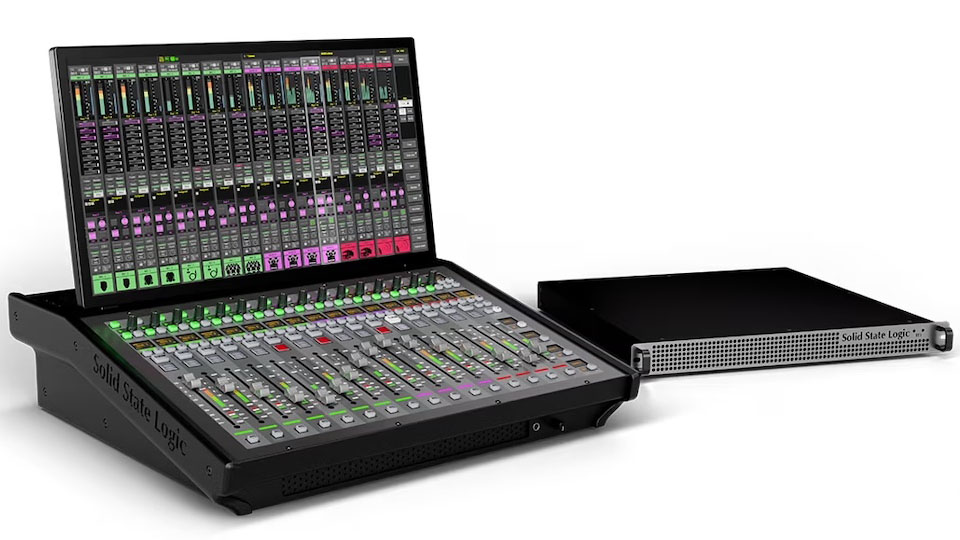
Oxford, U.K. (September 2, 2026)—Solid State Logic’s TCA Tour production system, built from the brand’s System T components and designed for broadcast, touring and live production environments, will make its IBC 2026 debut.
Combining 16 full-size faders and fully integrated onboard I/O in a ruggedized frame, TCA Tour includes a custom adjustable mount for a touchscreen and a PC running SSL’s Tempest Control App. It is available with optional per fader OLED displays and individual fader metering and comes pre-wired with eight mic/line inputs, four line outputs, headphone monitoring and a built-in network switch. TCA Tour is compatible with all System T DSP engines, including the TE1, TE2 and the software-defined Virtual Tempest Engine (VTE), as well as SSL’s legacy T25 and T80 engines for integration into a range of existing ecosystems.
• Tech Partners Announced for 13th Annual Mix Sound for Film & TV Event
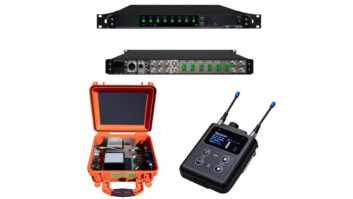
TCA Tour natively supports third party Dante, AES67 and ST 2110 devices, and provides direct AoIP routing, integrated FX processing and SSL’s renowned sound quality to meet the demands of any modern production environment.
At IBC 2026, the console will use SSL’s new V4.3 update to its System T platform with Open Sound Control (OSC) integration. This provides the ability for external systems to control console parameters via the open OSC protocol and is paired with a new TCA Tour hardware mount designed to accommodate a range of OSC-compliant third-party hardware controllers.
• Discover more pro audio news—get a free Mix SmartBrief subscription!
“This enhancement makes TCA Tour even more versatile,” Tom Knowles, director of product management at SSL, says. “TCA Tour already supports fader expansion through SSL’s range of System T desktop control tiles, including the Desktop Fader Tile (DFT), Desktop Fader Tile Plus (DFT+) and Desktop Master Tile Plus (DMT+) for dedicated monitor and main fader controls. With OSC integration, broadcasters can map System T’s extensive feature set to any OSC-compliant device or controller, allowing even more flexible and immediate access to System T functionality.”