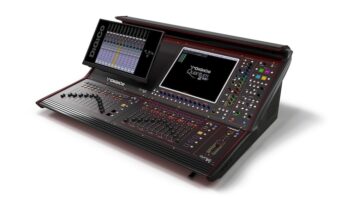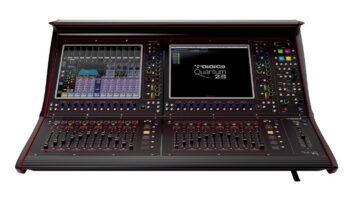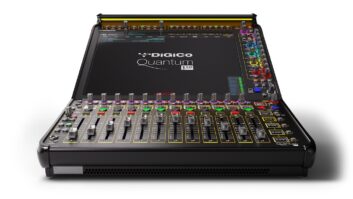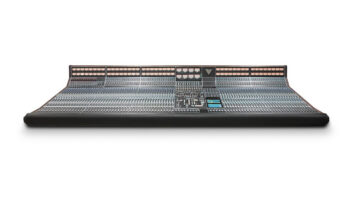
New York, NY (September 28, 2026)—DiGiCo is launching its latest mixing console—the Quantum638, staking out the middle ground between the line’s Quantum852 and popular Quantum338 Pulse desks. The new offering is said to bring together elements from DiGiCo’s SD5 and SD7 consoles and hones them specifically to the needs of theatre sound teams. The Quantum638 is additionally available with an optional Quantum638T version designed specifically for theatrical productions.
• Discover more pro audio news—get a free Mix SmartBrief subscription!
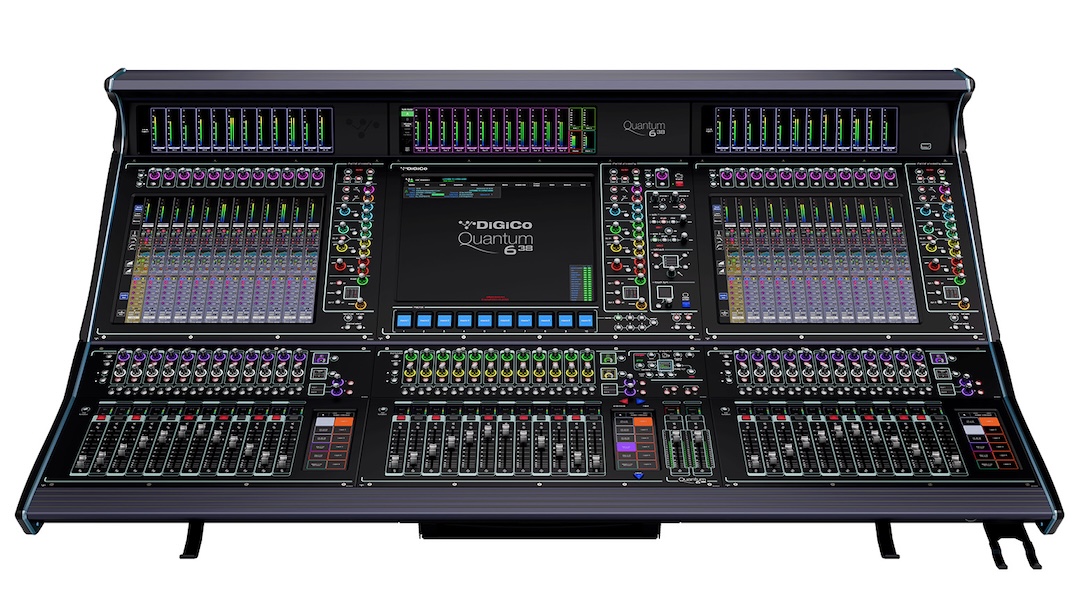
Roughly the size of an SD7, the Quantum638 is available in single-engine and dual-engine versions, both with dual DMI card slots and hot-swappable PSUs, for a choice of preferred redundancy options. Outfitted with 256 input channels and 128 aux/sub-group busses, the new desk features three 17-inch (42cm) LCD high-resolution touchscreens; three 6.8-inch (17.3cm) TFT screens located adjacent to the fader bays; 38 100mm touch-sensitive motorized faders split into three worksurface sections with two dedicated Master faders; enhanced Macro buttons; dual headphone outputs; and more.
• Apple Music Hall Venue/Studio Complex to Open in London
When paired with DiGiCo’s optional “T” theatre software extension, the Quantum638T version adds functions like Auto Update, Aliases, Players, advanced CG programming tools,and Matrix Nodal Delays for plays and musicals.
The new console additionally offers a 48×48 matrix with full processing, plus Quantum Range features such as 128 Nodal Processing instances, 64 insertable Mustard Processing strips, 16 Spice Rack slots and True Solo functionality. The desk sports onboard Dante and other connectivity options, including a built-in Fourier Interface Card for native worksurface compatibility with Fourier Audio’s transform.engine platform.
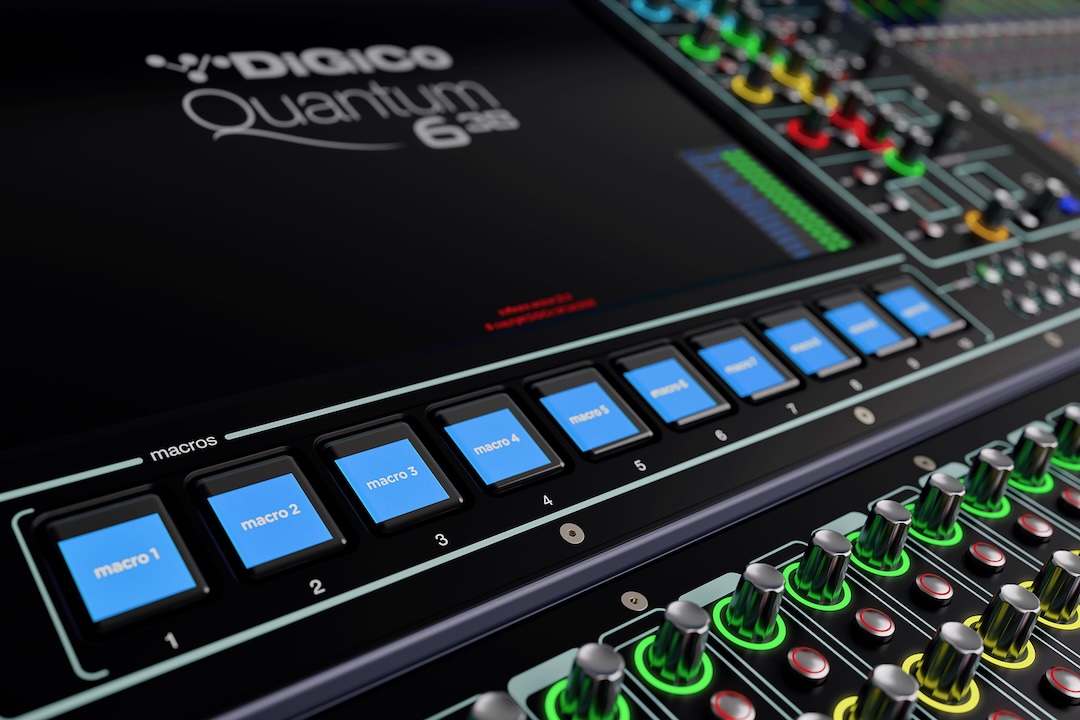
Lined up beneath the center screen are newly enhanced Macro buttons, and there are four designated channel Macros, meaning the Macro moves with the channel depending on the console layout.
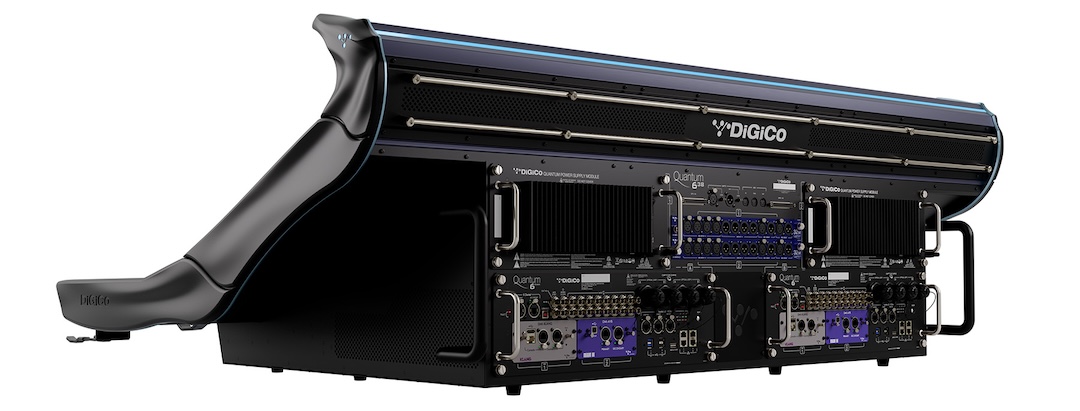
The rear panel features 32-bit mic/line inputs, eight 32-bit line outputs, four AES/EBU inputs (eight channels), and four AES/EBU outputs (also eight channels), as well as a DSub37 GPI and DSub37 GPO (16 inputs and 16 outputs), one set of MIDI In/Thru/Out, and a set of XLR SMPTE LTC I/O. Additional connections include four switched Ethernet ports and eight sets of MADI I/O, giving up to eight MADI interfaces or up to four redundant MADI interfaces at 48 kHz or four interfaces at 96 kHz.